




















Rachel Newman looks at how specialist colleges provide an essential bridge into independent living for young adults with complex autistic conditions
There are times when it’s quicker and easier to do something for your child rather than support them to do it themselves. It’s not that we don’t want to help our children to develop these independent skills—it’s just that we may be too busy, or we don’t want the stress of arguing with them why they should do it themselves. Maybe we don’t have the confidence to teach them what needs to be done.
This is particularly true for parents with children with autistic conditions, where the prospect of trying to help their child develop essential life skills can be daunting to contemplate.
Most parents expect that their children will eventually pick up these skills of their own accord, and generally they do. Once they leave home, they learn to take control of all aspects of their own lives and make their own way in the world, quickly learning from their mistakes and adapting to new circumstances and developing new, healthy relationships. But parents of young people with complex autistic conditions cannot rely on their children to develop these skills without specialist support.
Even when a child with autism attends a specialist school, the time devoted to teaching life skills can be limited. Schools may have life skills rooms and some specialist staff provision, but their principal focus will always have to be achieving qualifications and accreditations, and independent living skills is only a secondary consideration.
So, it is common for young adults with autism leaving secondary education to be lacking in key skills that they will need to thrive as independently as they can in the community.
Day schools and further education colleges now offer life skill courses to autistic adults that are tailored to their specific needs. But these courses are not available to people with more complex autistic conditions and behaviours that challenge, and this is where specialist colleges can be essential.
Specialist colleges have multidisciplinary teams (MDTs), comprising psychologists, therapists, and additional learning needs specialists, who can provide expert support. In our college, we regularly have students who become frustrated when they can’t express their needs, and then refuse to engage in activities. In the wider community an individual might expect to wait months before receiving specialist support, but we can offer immediate access to in-house speech and language therapists who will work with them to create tailored programmes to improve communication skills, allowing them to interact more effectively with others. Our psychology team works with the education and care teams creating individualised active support and behavioural support plans appropriate to the student’s individual needs, whether that be showing how tasks can be broken down into manageable processes or creating social stories to improve understanding.
This MDT-led approach can be highly effective in suggesting and implementing new ideas. For example, our psychology team recently suggested adopting a ‘special interests’ approach to teaching new skills which has been rolled out with much success. For example, if an individual loves superheroes or transport then all the teams across the college look at ways of building these themes into every aspect of what they do to encourage greater engagement.”
Specialist colleges are also usually located in carefully chosen locations—smaller communities, not inner cities, which are not too intimidating, and where it is easier to build relationships with local services. It’s not uncommon for young autistic adults leaving secondary education to have never visited a shop or been on public transport in the recent past. Taking a child with complex behaviours into a shop or onto a bus, for many parents is just too formidable a task to even consider. Our local community and shops are familiar with our students and their needs, and are supportive and patient as we introduce our students to these new experiences. One local hairdresser will suggest times when there are no other clients in the salon, to ensure that students’ anxieties are minimised.
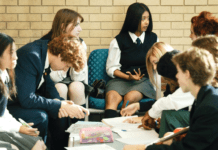
Teaching practical skills, such as loading a washing machine, personal hygiene management, using public transport, or work skills, are core to what a specialist college will offer. But equally important is the focus on relationships. Autistic people find it harder to build relationships. A common autistic trait is a lack of empathy, making it hard for autistic people to read other people’s emotions and needs. This makes it harder for them to make friendships or work alongside others. A specialist college will create social events developed specifically to encourage the development of socialisation skills in a safe environment. Even our most socially-introverted students love our Social Fridays, where we run a whole day of socialisation-focused activities, including the ever-popular karaoke.

When autistic people do forge personal relationships, they are more likely to accept others at face value and not question people’s motives, making them vulnerable to exploitation. So, specialist colleges not only promote relationship building, but also an understanding of what constitutes safe and healthy relationships. Our therapy team runs regular relationship groups for students who we feel need additional support in this area. We discuss every aspect of friendships, from different types of friends, to how relationships may break down and how this can be avoided. Importantly, to ensure that students understand how to promote only healthy relationships, we spend time discussing how to set boundaries and the importance of consent. If you told some of our students “give me £10 and I’ll be your friend,” they would happily accept this as if they thought it gained them a friend. So we help them to recognise what real friendships look like and understand that they are not conditional.
In our current, budget-conscious environment, funding bodies can perceive specialist colleges as costly and look for cheaper alternatives. However, this short-termism does not recognise that specialist colleges may be a cheaper option in the long-term. Without the solid life skills foundation that specialist colleges offer, young autistic adults with more complex conditions are less likely to settle successfully into the community, requiring more costly support and interventions long-term, as well as causing considerable distress to the young people and their families. However, the real importance of specialist colleges should not be judged on a financial basis. The critical benefit is how they succeed in supporting autistic young adults to expect more from life, and provide them with the tools they will need to reach their full potential and live their lives to the fullest.