






















Amelia Timms and Abby White on the sensory environment and why it matters.
We understand the world around us via our sensory systems. Tasting food, hugging our family and watching a beautiful sunset all require our senses to take in information and relay it to our brain. However, what if you were unable to enjoy that delicious meal because of harsh bright lighting, or if you were unable to enjoy that hug with a family member because of the scratchiness of their jumper, or what if you could not enjoy watching the sunset because of the noise from the busy road? When sensory information is being processed as it should, we can think of sensory processing as a filter—it allows relevant sensory information through, but filters out the less relevant sensory information, so that we get the right amount of sensory information to feel in sync with the world around us.
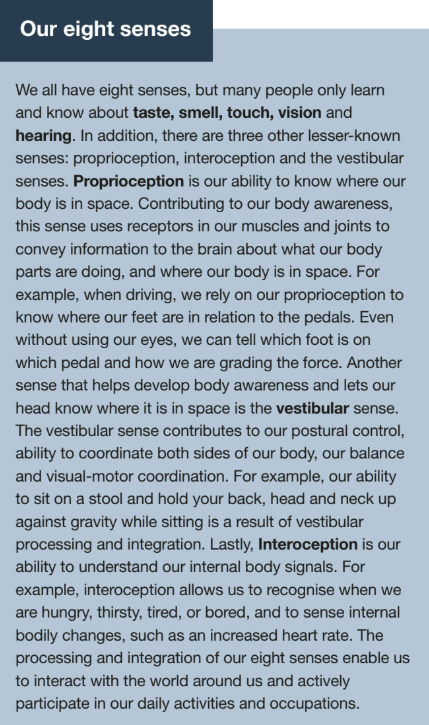
Physiologically, sensory processing occurs when a stimulus in the environment is registered by a receptor which carries the sensory message along a sensory neural path, and then the sensory message can either follow a spinal reflex arc, which causes involuntary and rapid muscular responses to stimuli, or the message goes to the brain for decision making and conscious muscle activation. For people with good sensory processing, their filter is top-of-the-line and they are able to filter out necessary and unnecessary sensory information, allowing for necessary sensory information to reach their brain, and for self-regulation in their environment.
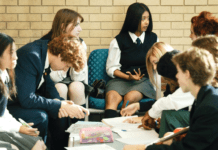
People with sensory processing difficulties can struggle to filter and organise sensory information, which can lead to sensory dysregulation and impact learning and engagement. In everyday environments, such as a busy classroom, we are constantly exposed to a wide range of sensory stimuli. These may include bright visual input from colourful wall displays, auditory input from scraping chairs or the hum of a computer, tactile sensations from carpets, chairs, and stiff school uniforms, and even smells from the lunch hall or cleaning products. The ability to filter out sensory information and remain focused in a rich, stimulating sensory environment reflects effective sensory processing. Among neurodivergent people, particularly autistic people, the prevalence of sensory processing differences is significantly higher than in the general population. Studies indicate that most autistic people experience sensory processing differences. These findings highlight the need for supportive and inclusive environments everywhere.
Creating a more sensory-friendly environment
It is important to recognise that everyone’s sensory processing system is different—some of us may need more sensory input to register our environment, and these people are often referred to as sensory seekers, while others may need less. Therefore, we should aim to reduce sensory overwhelm and create an inclusive, sensory-friendly environment that promotes calm and comfort for everyone, while also providing opportunities for sensory seekers to engage and meet their sensory needs.
Many simple and effective adaptations can be made to an environment, whether this be at home or in school, to create a more inclusive and supportive space for everyone. An effective way to make these changes is to consider the environment and the sensory stimuli in it, then determine how these can be reduced or adjusted.
In the school environment, simple adjustments to the classroom can make a significant difference. Busy, bright and colourful wall displays could be replaced by simpler, more neutral designs. Bright artificial overhead lighting can be minimised by increasing reliance on natural light, and light covers can be used to soften the harsh glare and intensity of overhead lighting. Classrooms can include a quiet reading area with blankets and cushions, providing children with a calming area in the often busy environment. Introducing a curtain canopy, sensory tent, or small tipi can create a more enclosed, tranquil area separate from the main classroom. Additionally, using scent-free cleaning products and ensuring good ventilation in the toilets and classrooms can reduce overwhelming smells and odours. These simple changes can help create a more comfortable and sensory-friendly environment. However, it is also important to consider the needs of sensory seekers. Access to outdoor apparatus, auditory and tactile walls, and natural herb gardens are simple yet effective ways schools can adapt their environment to support all children in meeting their sensory needs while ensuring that the space remains sensory-friendly and comfortable for everyone.
In the home environment, similar adjustments can be made, such as creating quiet areas in the living room or bedroom, or using soft neutral colours throughout the house, incorporating warm, soft lighting, minimising clutter, and using mild, natural cleaning products. For sensory seekers, equipment such as peanut balls, wobble cushions, scooters, pull-up bars, and outdoor apparatuses offers valuable opportunities for enriched sensory feedback. Through making these simple changes, we can create environments which are more sensory-friendly, and which support the engagement, learning and focus, that every child needs to thrive.