

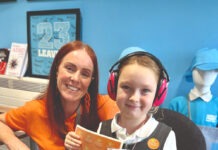





















Layne Harrod runs relaxed performances in London’s West End.
While you read this article, you’re welcome to leave it and come back to it as many times as you like. Stim, make sounds, and enjoy the experience in a welcoming and inclusive atmosphere. This is also how relaxed performances work.
It’s promising to see that more relaxed performances are programmed now than ever before, but there is always a need for more. If a show only has one relaxed performance scheduled and you cannot make that date, then you can’t attend. We regularly find when delivering drama projects with young people who are neurodivergent, autistic or have a learning disability, there are never enough relaxed performances available to choose from, and even fewer that are age appropriate.
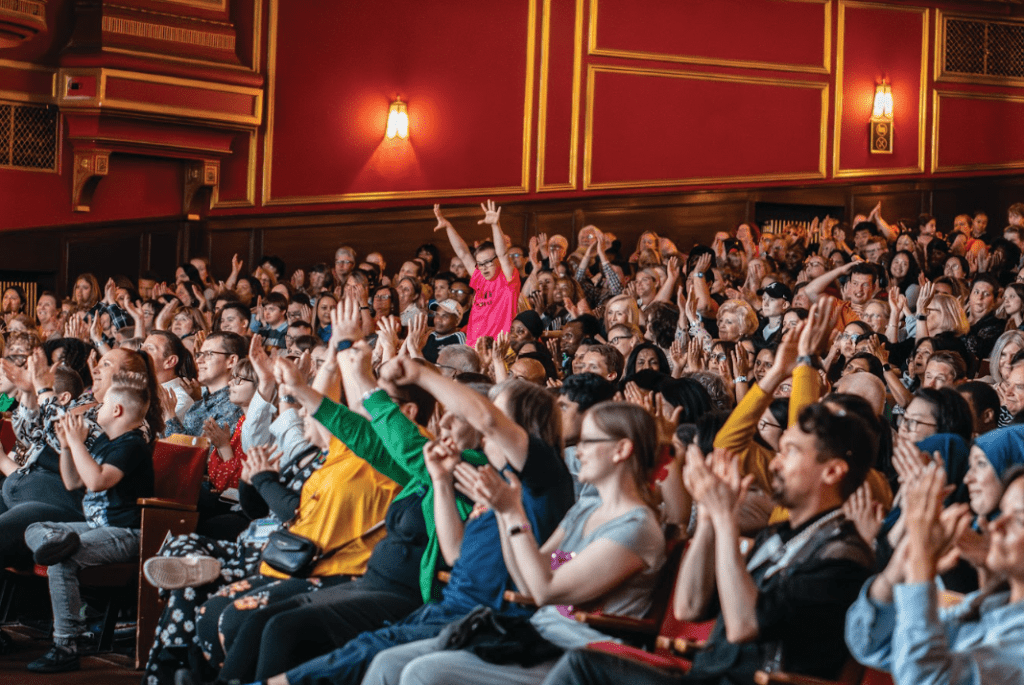
Scheduling a relaxed performance in a run of a show can bring a great benefit to the theatres and producers, by attracting new and diverse audiences through the doors. We were involved in planning and delivering a relaxed performance of Sister Act the Musical in the Dominion Theatre in July, and over half the audience had never attended a relaxed performance before. However, alongside the benefits sit significant challenges for theatres and producers that should not be overlooked. These challenges include a loss of income due to not being able to sell the house at full capacity, and adding an extra performance to an ordinary programme of eight shows per week which presents a substantial additional cost. Go Live Theatre Projects previous CEO, Susan Whiddington, spoke in an earlier issue of SEN Magazine about the many successful collaborations we have had with theatres and producers over twelve years of delivering relaxed performances in the West End, all of whom have seen the value in committing to deliver these inclusive events despite the challenges.
When running relaxed performances our objective is to create opportunities for audience members who would not otherwise be able to access the theatre by creating a relaxed and sensory adapted environment coupled with affordably priced, subsidised tickets. We want families to leave the theatre wanting to attend another relaxed performance in the future and to recommend the experience to others. Our wider aims are to increase the number of relaxed performances taking place in the West End, which is arguably made up of theatres that present the most physical, cultural and financial barriers for people to access, and secondly, to improve the quality of relaxed performances taking place.
We also strive to bring clarity to what is meant by the term relaxed performance. You may have come across one or all of the following: Relaxed Performance, Chilled Performance, Relaxed Environment Performance, Sensory Adapted Performance, Autism Friendly Performance. These descriptions are often used interchangeably but are distinct by design and can have differences in meaning or certainly interpretation, to the organisations that run them. This is problematic when audience members attend a performance that does not meet their access requirements. We have worked hard to ensure it is clear what we mean by a relaxed performance when we run them ourselves.
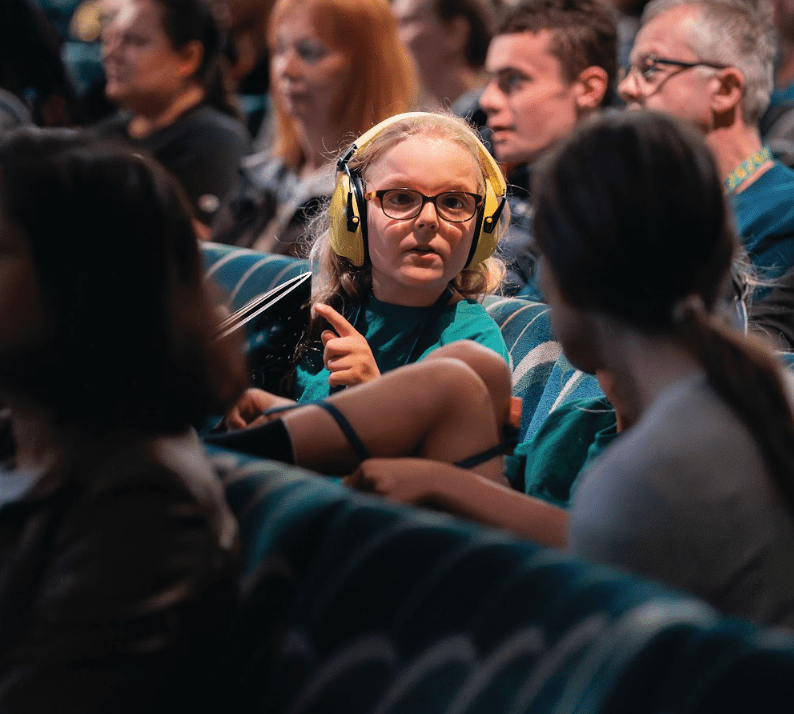
Taking ownership over our own Relaxed Performances allows us to collaborate with producers, production staff, cast members and front of house teams to ensure that appropriate adaptations are made, and that ticket prices are kept low, ranging from £7.50 to £17.50. We know that for the families planning to attend, there is an element of risk when making the booking and financial commitment; will they be able to attend on the day or if they do attend, will they be able to stay for the duration of the performance. As part of The International Relaxed Performance Network (IRPN), we meet with peers from across the globe, share best practice and discuss challenges, from both an audience and industry perspective. These important reflections allow us to avoid resting on a formula for delivering relaxed performances but instead ensure we respond to valuable feedback and consider new advances in technology that can enable a more autonomous experience for audience members. For example, providing audience members with headsets that allow them to adjust the volume themselves to better suit their needs.
We hope that the introduction of accessibility standards for theatres will support our mission to increase the number and quality of relaxed performances in the West End. It is our collective responsibility to make these spaces accessible, allowing every individual to experience the magic of live performance without reservation.