













We should take the time to work in a way that genuinely includes learning-disabled voices, writes Kallum McGuire Lewis.
I’ve had the privilege of witnessing first hand how people with learning disabilities defy expectations every day. The students I work with are thriving—building skills, expressing themselves, and leading fulfilling lives. Take Madeline, one of our students. When she first considered working in our social enterprise café, the thought alone triggered overwhelming anxiety. The fast pace, loud noises, and pressure of customer service left her feeling panicked and unable to step into the role.
With one-on-one support, structured exposure to the café environment, and gradual increases in responsibility, Madeline built resilience and confidence. She started with short visits, then assisted behind the scenes baking delicious cakes, before slowly taking on customer-facing tasks. Now, she confidently welcomes thousands of customers a year, takes orders and handles payments—all things she once thought impossible. Her progress extends beyond the café. The coping strategies she’s learned have helped her manage anxiety in other areas of life, and she carries herself with newfound confidence: Now I’m not so shy, I greet customers. I’m coming out more.
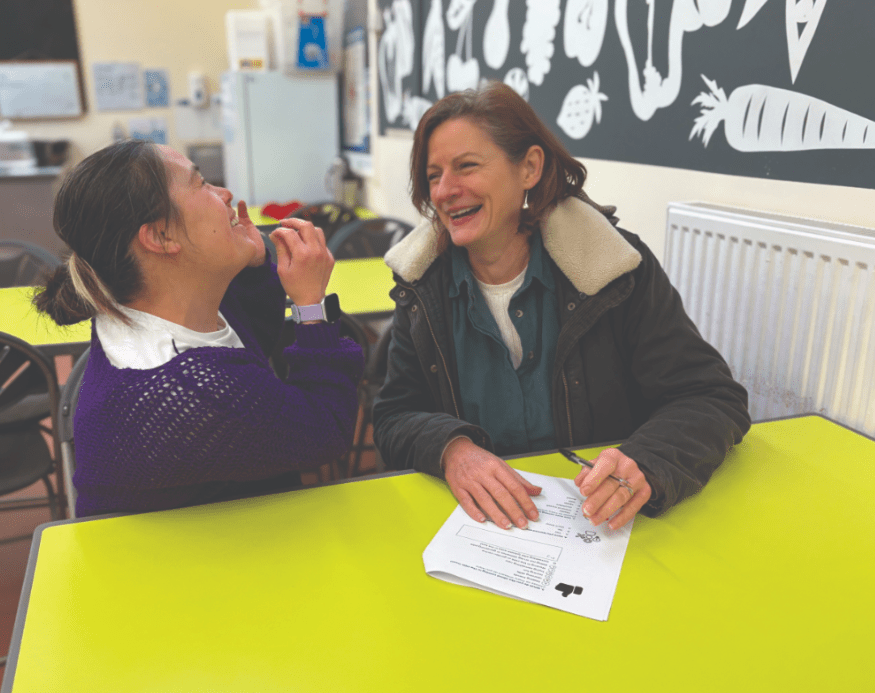
Working alongside learning-disabled people has shown me that meaningful communication isn’t just about delivering a message—it’s about ensuring that every voice is heard in a way that suits the individual. A recent example of this was our 2025 student survey. Previous surveys yielded minimal responses because they simply weren’t accessible enough. This time, we took a different approach. We developed an easy-read format, incorporating clear language, symbols, and visual cues so students could fully engage with the process. More importantly, we didn’t just distribute the survey and hope for the best. We spent weeks working one-to-one with over a hundred students, adapting our communication styles to meet the needs of each individual. For some, this meant reading questions aloud, using gestures, or pointing to images. We prioritised understanding over speed, ensuring students had the time and support to respond meaningfully. This resulted in a dramatic increase in engagement, providing us with rich, meaningful insights into what our students truly think and feel.
These insights help us enhance our services. For example, we have focused on developing accessible courses for our students, responding directly to the needs of our students, and we will expand our independence-boosting life skills course in response to the high number of students who stay at home in the week. Before this survey, we simply didn’t have this data.
So, accessibility isn’t just about adjusting formats, it’s about creating spaces where everyone is valued and understood. Learning disabled people deserve not just to be spoken about but to be active participants in shaping their own narratives. If we take the time to work in a way that genuinely includes learning-disabled voices, we can continue shifting societal perceptions for the better. Let’s not just share stories of learning-disabled people breaking barriers; let’s make sure they are the ones telling those stories.