





By Dhekelia Matthew-Smith
Apparently I don’t look autistic. But what does this mean?
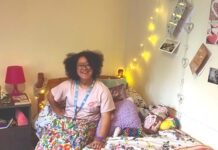
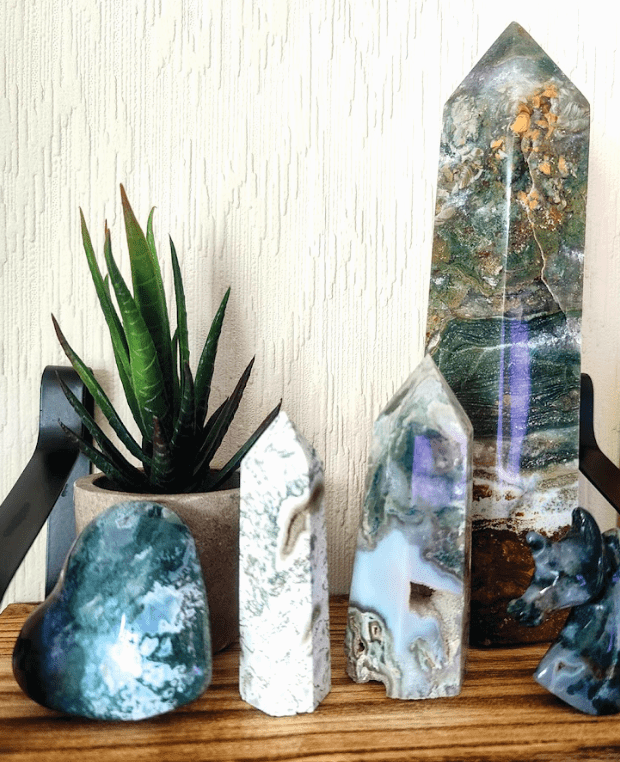
There’s a trend on social media based on this misconception of what an autistic individual looks like. Creators share things that the outside world wouldn’t normally see. For example flappy hands, spinning, special interests, obsessive behaviours, restrictive eating, sensory issues and even meltdowns. As it happens, I do have special interests (I have a robust crystal collection and I like planes), but the social media trend just highlights the misunderstanding which society still has of autism and how it affects each individual.
My entire life I have been misunderstood, and I’ve felt like a square peg in a round hole. The way my autism affects me won’t be the way it affects someone else. I thrive with routine and structure, I like systems and processes, I have a strong sense of justice, I don’t waive the rules, and I can’t lie to save my life because my face doesn’t get the memo. The saying ‘if I don’t say it my face will’ comes to mind, but to be honest my face is completely independent of the rest of my body, so I have absolutely no idea what it’s telling anyone. As a child I didn’t know how to play. My mind can’t do imaginary things. Even now as an adult I absolutely despise having to do any form of role play, and I find it difficult to display expected behaviours in an environment where my unmasked self would not be accepted. I need to be selective with who I unmask around. That shouldn’t be the case, but I have learned the hard way that the world just does not accept me as I am.
My diagnosis came after my PTSD therapist suggested I be assessed. She was the first person who recognised that I was struggling and autistic. It took a mental breakdown for someone to help me. I didn’t believe the therapist at first, and she didn’t push it. She just said that it was something I should consider. My eldest son, however, was offered an autism assessment when he was two. He didn’t play (like me), he didn’t make eye contact (like me), he was hyper-verbal with non-verbal episodes (like me), he lined up his toys in order (like me), he hated physical touch (like me), he had intense interest in one thing at a time (like me) and he couldn’t cope with change in routines (like me). At one point we were urgently referred to the hearing clinic because pre-school thought he was deaf. He wasn’t deaf, he was just so overwhelmed in that environment that he shut down and became non-verbal. He was displaying all the typical signs health visitors look out for, and he was offered the assessment.
It used to feel invalidating when someone said I don’t look autistic. Nowadays I just stay masked around that person. But I do wonder if it would have more impact if I responded by acting out my version of the social media trend. Would I look autistic if I started flapping my arms in excitement, making my vocal stims, having a meltdown over the wrong spoon or showing them my collection of pretty rocks?
If you take a young boy and a young girl, both presenting with the same traits, the boy is more likely to be identified as autistic than the girl. My son was identified as autistic for displaying the signs. But for me, this wasn’t even a consideration. A female who presents in the same way is likely to be labelled as shy, rude, stubborn, or anxious. Anything except autistic.
So if we base our idea of autism on what autism looks like externally, why is it that girls are still not being put forward for autism assessments as often as boys? The way autism is measured is still tailored more towards the male presentation of autism and does not consider that autistic females can be better at masking and positive niche construction.