










“You’d be amazed”, says Imran Hassan, “there are a lot of people, including myself, who have made a lot of progress within the programme.”
I was diagnosed with autism when I was in school. It didn’t really bother me at first. I just thought, well I’m just like anyone else, We’re all human. We’re all equal. It’s a gift that I can appreciate. But then it was quite challenging growing up with autism. Sometimes it was easy to make friends, but then sometimes it wasn’t that easy. I guess I was in the wrong crowd. Some people didn’t really understand my needs and vulnerabilities.
But that was then. Growing up, I think a lot of people started to realise that people like me just want to be accepted. We just want validation—not for what we are, but for who we are. I started to learn that if you’re out there, people can see you. People can notice you. People can be proud of you. That’s not the only reason why I feel more confident to speak up now. Maybe it’s that I grew up. It takes a while for us to grow up.
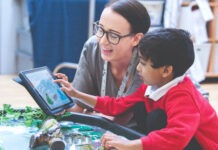
When I was at school, teaching assistants played a big part. The way they were supporting me, I felt I would like to do what they do. So I told my head teacher and my deputy head teacher that I would like to be a teaching assistant, and they gave me work experience in the primary setting in the same school, as an enrichment activity, similar to a social activity or a club. So instead of going bowling or biking, I was given the opportunity to help young primary children and work with the team, slowly progressing towards being a TA.
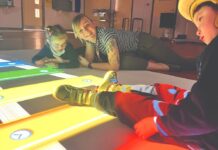
When I left school, I went to college. My autism was a bit tricky because they didn’t have a staff member to support me, and the college was so big. I felt like I was kind of lost in the shuffle. It was hard to connect with people. The trickiest part for me was to be accepted. I felt I grew up too fast when I joined college. I wasn’t very confident of my social skills. I wasn’t fully able to express myself towards other people, and what also hit hard was being rejected. Obviously in college it’s normal that lots of people are thinking about relationships, but at the time relationships were quite tricky. That was one of the struggles for me as an autistic person during my time in college. I felt like I wasn’t focused on my main coursework. I was young, I didn’t understand any better, and I guess I was afraid of being alone. That’s one of my main weaknesses being autistic. I still live with my family, but I feel like I should have my own house. I’m not married yet, and I don’t have any kids. During the time when I was in college, I imagined I would have a wonderful life, meet somebody there, a potential partner, then settle, married, with one or two, maybe three kids. I’m not saying this because I desperately want it. I’m just expressing what my life could have been like. But it is what it is. Here I am right now, and I’m making a big difference out of it. I don’t know what it’s like to have my own family, with a wife and kids, but in my workplace now, I’ve developed something similar to that. I’m helping out at a college with young people who have autism, disability and Down’s syndrome. Supporting these students, it’s very similar to the kind of struggles I went through, getting upset over something that made me feel hurt. I see the students feeling the same way I do, whether they got hurt by something, maybe a rejection that hit them, that was too strong for them, or maybe trying to control emotions. That’s why I support these students and try not to let it affect them.
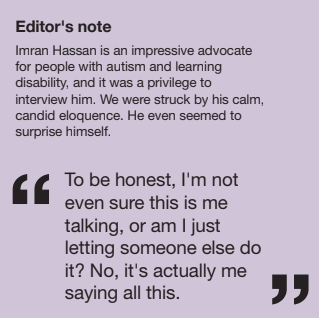
The students know I have autism, so they see me as a role model and I feel honoured to be that kind of person. I want them not to have the same problems as I used to have. So I try to be a better sort of guide, to show them not to go through the same path as I did. Like I said before, when it comes to work and family life, I’m trying to be that kind of mentor figure. If I do something that’s right, they’ll do something that’s right. If I drink orange juice, they’ll drink orange juice. If I eat a protein bar, they’ll eat a protein bar. Or if I have a notebook and write down a list of things I’m going to do, they will get a notebook and write down a list of things that they want to do.
If COVID had never happened, I would have completed my final year at college. but I would never have gotten to be in DFN Project Search. Like anyone else who’s in Project Search, they’ll tell you how much it has helped them. It helps them grow their confidence. For me, Project Search gave me a second chance. I didn’t want to be remembered as that original Imran. I wanted to try again. I wanted to be this reborn version of me, as I am right now, the current Imran. This is how I want people to see me. The old Imran would not have made it. One of the things I’m really proud of in Project Search is that I’ve become the better version of me. It was all thanks to the tutor, the job coach, the work principal and the safeguarding lead. You’d be amazed. There’s a lot of people, including myself, who have made a lot of progress within the programme.
Where I am right now, I feel in a much better place.