
























Diane Montgomery on identifying dyslexia in the Reception Year and remediating it by the end of KS1.
Dyslexia is an unexpected reading and spelling problem in the presence of ability and normal teaching methods. The usual UK practice is to identify it after children have failed to learn to read by about 7 years of age. They may then have additional support and individual help but still fail and so an EHCP has to be developed to gain funding for specialist provision. The pupil may be in Year 6 before this is obtained, and even then it may not work and they may never catch up with peers. Lots of effort, time and money is spent on this process. The process and constant failures are stressful and can lead to mental health issues for the dyslexic, parents and teachers.
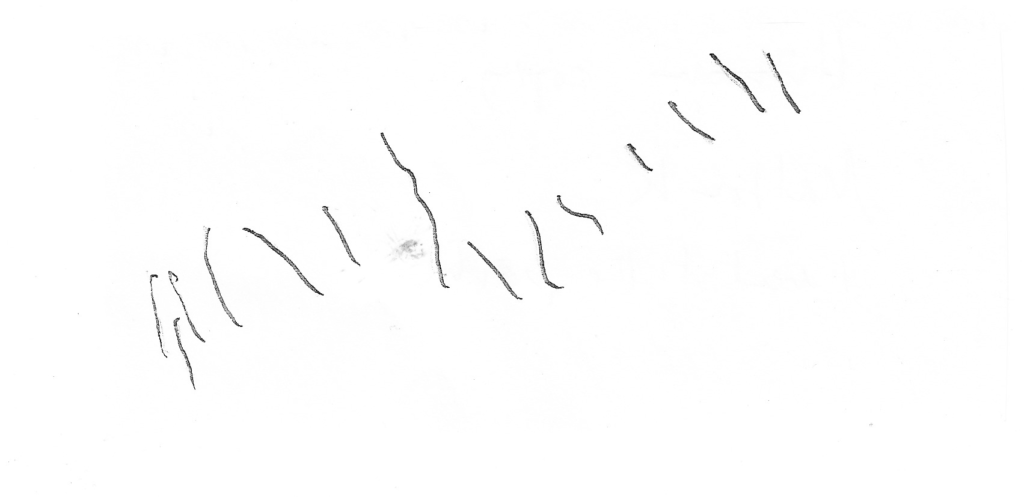
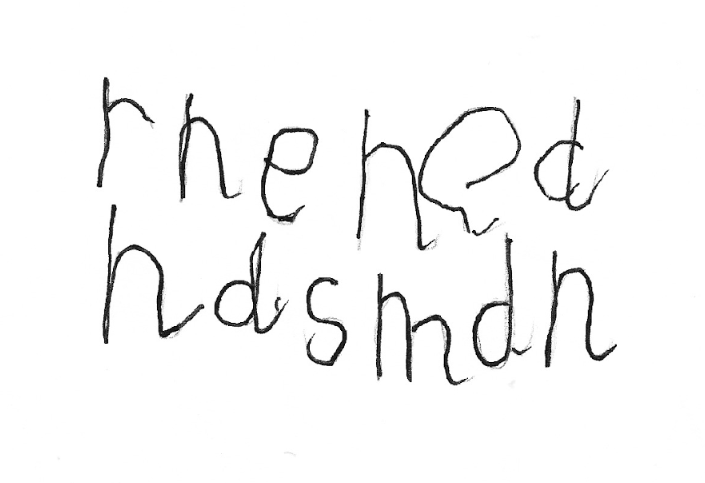
Decades of teaching and research showed a different approach was essential. This was through ’emergent writing’. Instead of copy writing their ‘news’ pupils are asked to try to write it ‘free-form’—without any help soon after entry to the Reception class. This shows what they have learnt in preschool about literacy. A study of 555 scripts found that 7 in 100 pupils from disadvantaged areas (twice the national average of 23% for Free School Meals) had already begun their literacy journey. However 51 in 100 pupils in advantaged area schools (half the average of FSMs) had begun to read and write. Four stages in normal literacy development were identified and potential dyslexics remained in Stage One throughout the Reception year. Figure 1 shows the four stages from marks on paper to readable stories.
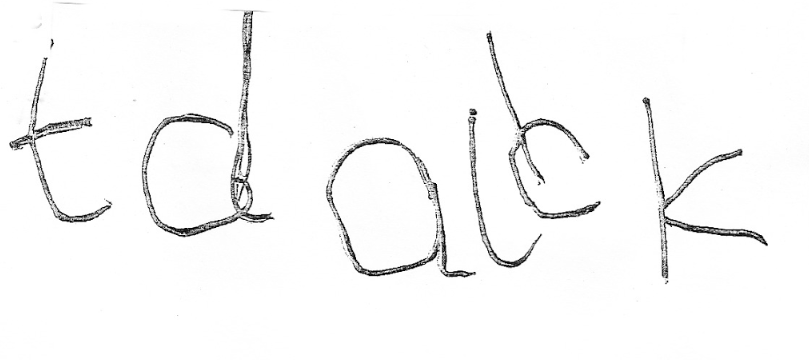
What children can write unaided they can also read and the errors they make are not random or careless but show their level of literacy knowledge. It is an easy to use diagnostic tool. The next problem was how to improve the literacy skills of the disadvantaged and any dyslexics. The answer was found by analysing how some advantaged preschool children had taught themselves to read. They appeared to do what the Phoenicians, the inventors of the unique alphabetic system once did in 700 BCE. Their Semitic language had 22 consonants and no vowels and these appear first in children’s writing but not in dyslexics’ scripts. This is because consonants have a feely pattern in the mouth, vowels do not. Try saying “l” and “t” and notice the differences. The Greeks added the vowels later. The English alphabet has 21 consonants, these give the only concrete clues during speaking and reading. The sounds (phonemes) and symbols (graphemes) are abstract units and can vary.
If children learn to speak clearly and are in families that have books and share reading with them they will be exposed to the sounds in words (phoneme awareness) and begin to notice the consonants. They can easily play the, “I Spy something beginning with “d” game (“d—d—door”). Then they begin to connect specific symbols with their symbols (symbol-sound correspondences). If allowed to explore these connections through emergent writing pupils extend their spelling knowledge as long as adults encourage them and do not keep correcting the ‘creative’ spellings. Texting is a form of this. Creative spelling transfers to reading which is always months ahead of spelling because it is a recognition skill with all the letters already present and in the correct order. Readers can guess much of it from context and partial phonic clues. Spelling is a recall skill and harder to acquire which is why some specific phonics teaching is needed as well as ‘Look and Say’ reading teaching but separately at first. Children are much better at learning and problem solving than we give them credit for. For example without any teaching they learn the language of the home if in a word-filled world. They could do the same with reading but teaching speeds the process up except in dyslexics and those with specific language impairment.
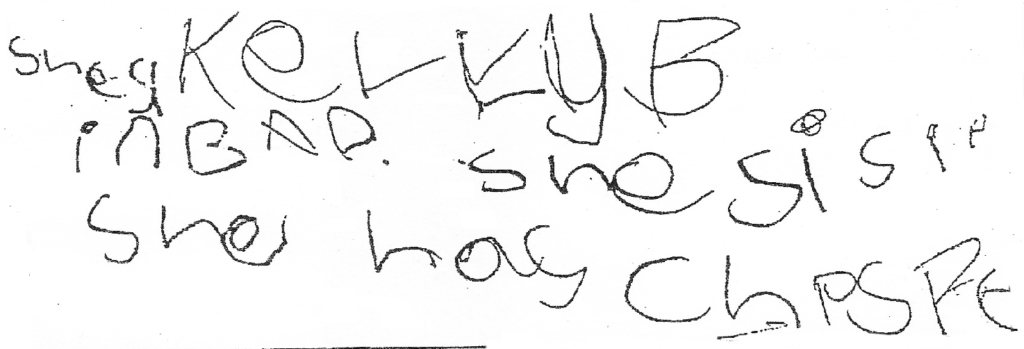
What prevents the dyslexic child from learning to read and write?
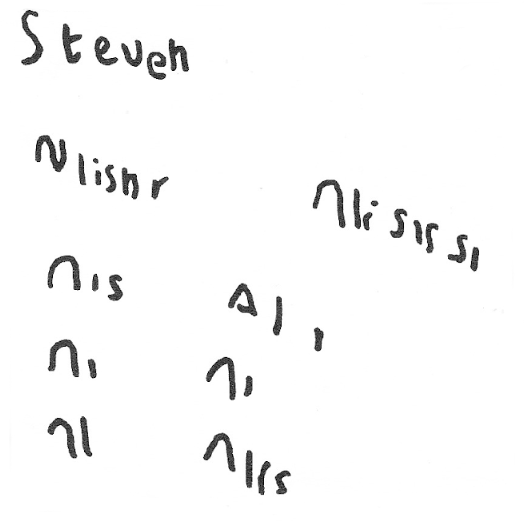
Research shows that the best predictors of later reading achievement are lack of phonological awareness and alphabetic knowledge, failure to acquire sound-symbol correspondences and appreciate rhyme. I hypothesised that no dyslexic Phoenician could have invented such a system. Perhaps dyslexics could have a problem in becoming aware of the consonantal patterns in words during speaking and reading. An articulation awareness (AA) test was designed and carried out with 114 diagnosed dyslexics already receiving tuition in a specialist referral Reading Centre compared to 84 controls matched for reading and spelling ages in a mainstream school. The dyslexics scored 4 out of 10 on AA and the controls scored 8 out of 10 even though they were five years younger than the dyslexics. As a result it was decided to implement an articulation awareness training with the 5 initial letters i t p n s in the Teaching Reading Through Spelling (TRTS) dyslexia programme. It was tested with non-readers (dyslexics) in Years 1 and 2. It was termed Multisensory-Articulatory-Phonogram-Training (MAPT). Figure 2 shows the effects of MAPT on Steven, aged 6.5 years. Most remedial work involves multisensory training but does not always include systematic articulation training.
In the present research MAPT was introduced into the Reception year classes through advisory notes on each child’s scripts two or three weeks after entry, after six months and then on entry to Year 2. The results were positive even though it could only be achieved at a distance and the teachers could ignore the advice if they chose to. In the disadvantaged area schools 7 in 100 children had started to read and write on entry and it rose to 63 in 100 after six months. In the advantaged groups 51 in 100 entered with some reading skill and after six months it was 61 in 100.
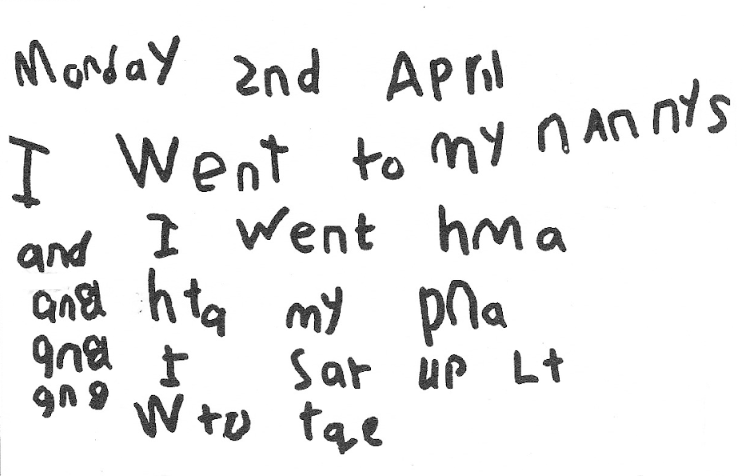
After six months, five of the disadvantaged and one of the advantaged were in the ‘at risk of dyslexia’ region. They were still in the first level of literacy development. When they entered Year 2 and were given a ten minute free-form story writing test only one child was in the dyslexic region but he (Hisham in Figure 3) was already reading and writing above the level of many much older dyslexics in previous studies.
The data showed that boys on entry to Reception had poorer literacy skills than girls. They were more at risk from dyslexia at the end of six months in the ratio of 13 boys to 9 girls roughly 4 to 3 rather than 4 to 1 commonly seen in the literature. This suggests that the current systems of assessment were underestimating the literacy difficulties of girls. The school SATs at the end of KS1 showed that the disadvantaged schools’ results were 30% higher than in their three previous years and the advantaged schools’ results were 8% higher having less room to improve. The MAPT procedure is a no-cost, no-extra-time-for intervention.
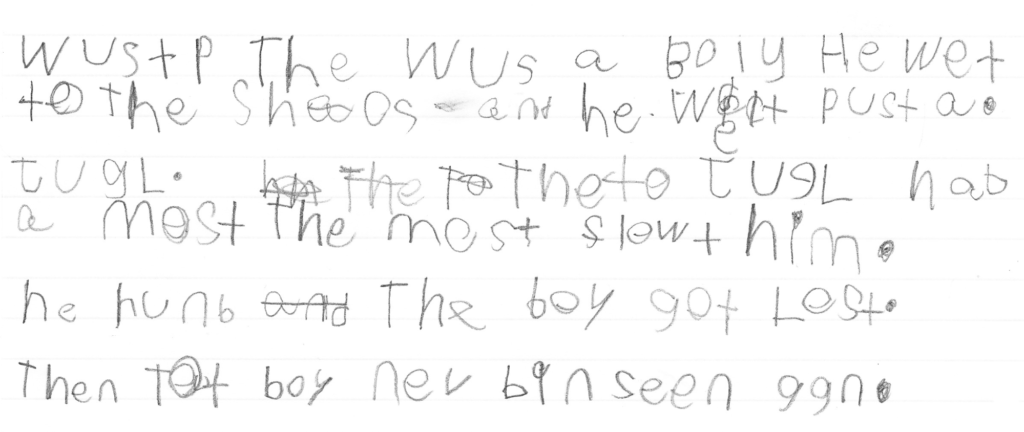
has broken the alphabetic code now. His Year 1 teacher has noted the reports, but this could have been achieved in Reception (his Reception teacher did not appear to take any notice of the reports and had the fewest successful readers after six months and emphasised correct spellings). Hisham’s scores on entry to Reception and after six months were at Level 1. He also has a mild handwriting coordination problem
seen in the variation in pressure (dark and light), faint script indicating weak pressure. Lines on an undersheet have been helpful to him. He writes 44 words in 10 minutes (4.4 words per minute), which is half the expected speed for his age group.
Another part of the project was to examine the motor coordination skills in the copy writing of the cohort and it became evident that poor motor handwriting skills lowered the level of acquisition of literacy. In cases of dyslexia it made the dyslexia more difficult to overcome and put it into the ‘severe’ end of the dyslexia spectrum as in Figure 3. The British Dyslexia Association identifies 10% of the population as dyslexic with 4% of them severe cases. Earlier studies in this project using a 20 minute writing test found 18.4% were identified as dyslexic in disadvantaged areas (the ratio of boys to girls was 3 to 2). More girls were identified as dyslexic by quantity of spelling errors, when usually they are missed or not referred because their reading performance is generally better than that of dyslexic boys.

Overall, in order to overcome dyslexia by the end of KS1 it is necessary to employ a MAPT strategy in Reception and then those still at risk should be placed on the initial stage of a specialist dyslexia programme in Year 1. An LSA can be trained to undertake it, preferably with pairs of pupils because otherwise the lone dyslexic does not get enough cognitive rehearsal time. The research also showed that published specialist dyslexia programmes are more effective than informal teacher designed ones, they are APSL (Alphabetic-Phonic-Syllabic-Linguistic) and give one years’ uplift in the first six months. If they do not, then another programme should be used.