























Practical everyday aspects of Developmental Coordination Disorder (DCD), by Emily Lawlor.
Despite its prevalence, dyspraxia is often misunderstood and under-discussed, meaning that we often don’t consider the consequences it has on a person’s daily life. Dyspraxia affects fine and gross motor skills, and can impair a person’s physical coordination and abilities. This can make everyday tasks or activities such as using cutlery or climbing stairs challenging and effortful. However, the effects of dyspraxia go way beyond the physical aspect, and can also influence a person’s cognition, social skills, emotional wellbeing and quality of life. Dyspraxia is unique in the way it affects a person, and every person experiencing the effects of the condition has a different experience.

Research has highlighted that the range of difficulties that learners with dyspraxia face impacts their academic success. Therefore, it is vital that schools consider the potential impact that dyspraxia can have on their learners. Early diagnosis is important, but intervention is crucial at an early age to ensure that children are guided with tailored support strategies. This support helps children navigate challenges in school and reach their full potential.
Further research indicates that early intervention which involves a collaborative, multi-disciplinary approach is most effective. Interventions delivered from a wide support network, including the likes of parents, educational staff and healthcare professionals, have a significant positive effect on the motor skill development, academic performance, confidence, independence and participation of children with dyspraxia. By gaining support in all angles of their life, children can become more independent and engaged in daily activities. This engagement helps children to build confidence in their own abilities and enable them to adopt and apply strategies to help them overcome or navigate challenges that they come across in daily life. In turn, this will reduce the risk of children with dyspraxia developing poor mental health and a low quality of life, which are common adverse effects of living with dyspraxia.
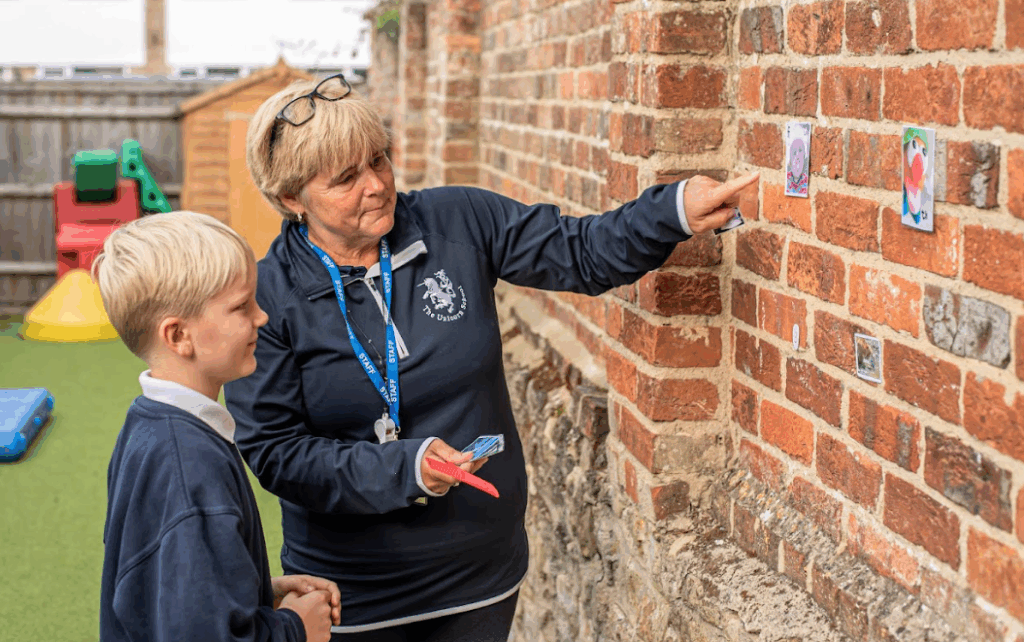
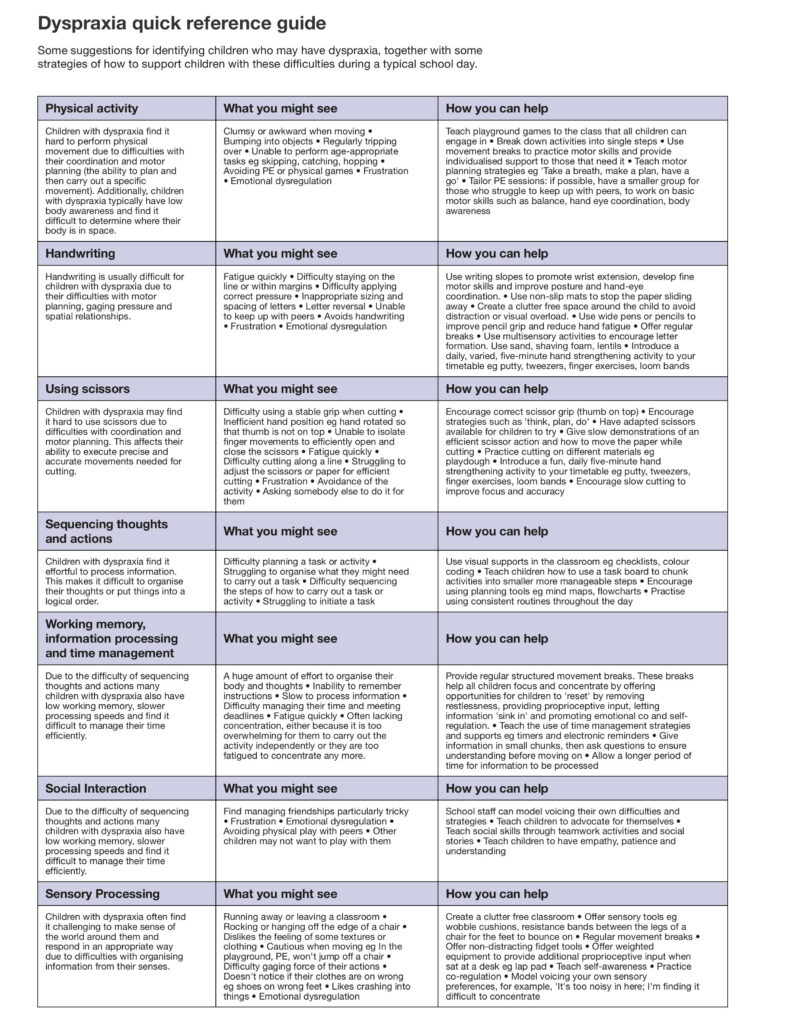
So how might you spot someone in the classroom struggling with the effects of dyspraxia, and what could you do to help them? Or if your child is feeling the effects, could you work collaboratively with school to suggest adaptations that could help to support your child? Below are quick reference guides to identify children that may have dyspraxia and strategies of how to support children with these difficulties during a typical school day.
By raising the awareness of dyspraxia in schools, we can identify children who will benefit from early intervention and support in everyday activities. Working together, we can encourage these children to have an active lifestyle that involves embracing play and daily opportunities to help build on their skills, which is so important for the development of all children, but especially those with dyspraxia. This way, we can help children become confident in who they are, proud of the person that they are becoming, and help them pursue a positive, fun and thriving future.