











You could do a wonderful thing, writes Saskia Merry, if you can adopt a child with special educational needs.
The number of children waiting for adoption exceeds the number of approved and waiting adopters by five to one. Out of the children waiting, many will be those who are aged five or over, in sibling groups, from black and minority ethnic groups and those with significant additional needs. Some children are voluntarily given up for adoption, but in most cases a judge grants a placement order for children who cannot live in their birth family, which allows them to be placed for adoption. These children may have experienced pre-birth exposure to drugs and alcohol, witnessed domestic violence, and experienced physical harm and neglectful parenting. Some may also have health, disability, and developmental needs which will need to be considered by adopters. According to the Adoption Barometer (Adoption UK, 2023), 11% of adopted children had a diagnosis of Autistic Spectrum Condition (ASC), and a further 18% are suspected to have ASC. The same survey highlighted that 16% had a diagnosis of ADHD, with a further 23% suspected to have ADHD.
All kinds of people make wonderful adopters. You can be single, in a relationship or married. You must be over 21 but there is no upper age limit. All genders and sexualities can apply. You can have any faith or none at all. You don’t need to own your own home, or to have a garden. What you do need is space in your home and your heart, a willingness to learn, to be curious and empathic, and lots of love and patience.
The first step is to contact an adoption agency and attend a no-obligation information session. When you feel ready, you can submit a formal application—the ‘Registration of Interest’ (ROI). The acceptance of this by the agency marks the start of the official assessment process. This takes much less time than you might think; you can go from ROI to approval in as little as six months. You will need to attend an adoption preparation training course and a reflection and loss workshop. The second stage includes a series of in-depth interviews with your designated assessing social worker—the ‘home study’. This information forms the basis of the prospective adopter report (PAR) that is submitted to the adoption panel for consideration of your approval.
After approval comes the family finding process. It is impossible to put a timeframe on this because it depends on the adopter and the children available for adoption. One method of family finding is through a specialist website called Link Maker which is where adopters and children needing adoption are profiled. It is a secure website, only accessible to approved adopters and professionals.
For children with SEN, it is important that adopters see the whole child, not just the need. We run in-person play events where adopters have the opportunity to meet some of the children who have a plan of adoption. As adoption workers, we are privileged to witness that initial spark of connection, as approved adopters help a child guide a water cannon, push them on a swing, or play hide and seek. Even with that spark, it is important to be realistic and to make an informed decision. You would need to carefully consider the child’s needs and discuss with your social worker whether you could meet these needs. You would need to consider what support is available—from your friends and family network, local organisations, schools, the adoption agency. Your child will need a strong advocate. How will you cope now that it’s you working with professionals, challenging the referral delays and so on? Of course, parenting a child with SEN is challenging—all parenting is challenging. But it’s rewarding too. Just last week I met a child who has continuously smashed all the ‘he will never’ assumptions that were originally predicted for him. There are little wins to be made each day if you know where to look for them.
If you would like to help a child thrive and achieve their best life in the warmth and security of a stable loving family home, ‘You Can Adopt’ has a handy agency finder where you can pop in your postcode and find a list of agencies in your area. We would love to hear from SEN professionals. Your skills and experience would be invaluable when it comes to adopting.
Freya and Jake
Sarah describes how she and her partner Tom adopted siblings Freya and Jake with support from Adopt Thames Valley.
I always imagined having a big, happy family. My partner and I have been together since we were teenagers, and we just assumed kids would come naturally. But after years of fertility treatments and heartbreak, we found ourselves at an adoption info session, searching for hope and a new way forward. Before starting the adoption assessment process, we were thinking we wanted a child as young as possible. But as we learned more, we realized that children are only little for a short time, and what really matters is the life you build together. Age, background and ability became less important than the chance to love and grow as a family.
It was New Year’s Eve when we got a call from our social worker saying they would like to tell us more about Freya. Freya’s profile mentioned developmental delays, a family history of significant mental health issues, autism and likely learning difficulties. Reading this can be quite scary, but I’d had some experience of working with children with disabilities, which helps. We decided not to let fear or stereotypes make our decisions. Then, the week of the matching panel for Freya, we got a call informing us that her birth mum was pregnant. And that’s how her brother Jake joined our family.
Parenting is full of unknowns. There’s a lot you just don’t know. Freya’s needs weren’t obvious at first. We had endless medical appointments—vision checks, hearing tests, meetings with educational psychologists. It took years before we got a proper diagnosis for her learning disability. Jake, our son, was even more of a mystery. His learning difficulty, hypermobility, autism and ADHD weren’t diagnosed until he was older. So you learn to live with a bit of uncertainty. Sometimes it feels like you’re just waiting for the next assessment, the next report, the next “aha” moment.
If you’re not ready to fight for your child, you soon will be. I’ve filled out more forms than I can count—EHCPs, DLA applications, assessment questionnaires, you name it. I’ve sat in meetings with teachers, doctors, and social workers, making sure Freya and Jake get what they need so they can thrive. Securing DLA opens up other doors to, for example, free carer’s passes. We were fortunate that I could work part time; but now the children both receive DLA it takes the pressure off.
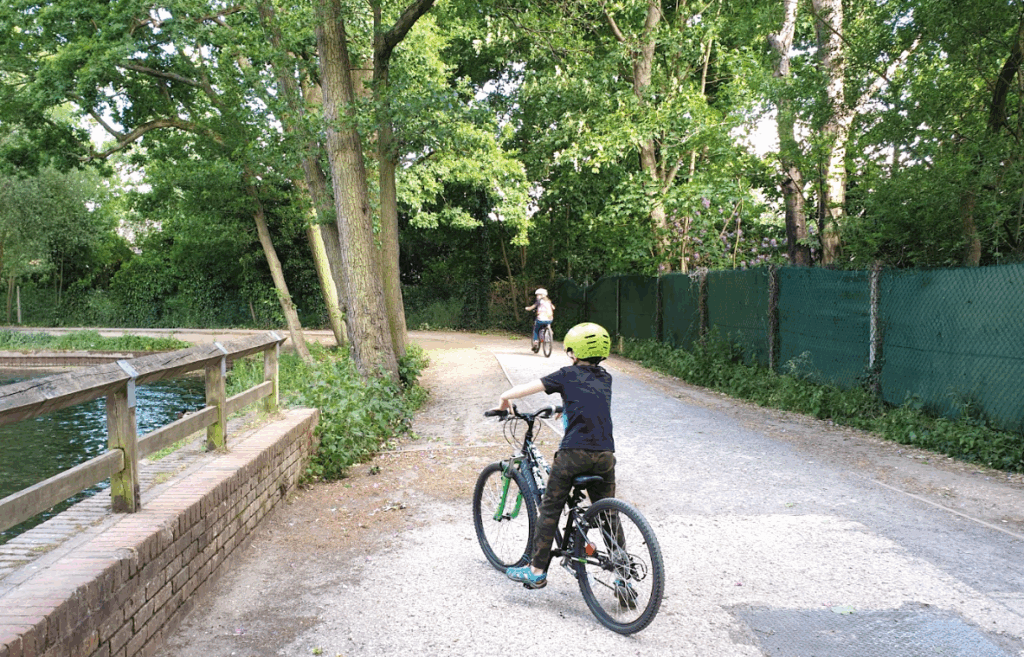
When Freya finally learned to ride her bike at ten, after months of practice during lockdown, I nearly burst with pride. Jake’s big moment was cycling to secondary school on his own. He kept stopping at a T junction as he didn’t know which way to turn. His lightbulb moment was when I explained he should follow the children with the same school uniform as him. Every step forward is a celebration.
If you’re thinking about adopting or parenting a child with special needs, know this: it’s absolutely worth it. Our home is filled with love, laughter, and more happiness than I ever imagined. In my view, parenting a child with a disability is even more joyous because you get to be a parent for longer. There are days when I wonder about the future—will Freya ever live independently? Will Jake find his place in the world? We want them to be independent, but we want to be mum and dad to them too.