






















How the right vehicle changed everything for Chris Edwards.
The thrill of turning sixteen—not just the promise of freedom, but the keys to your first car and your new driving licence. For me, as a disabled driver, that car wasn’t just a vehicle, it was a connection to the world beyond my wheelchair. From the moment I gripped the steering wheel of my first little hatchback, I felt a surge of possibility. That car wasn’t merely metal and wheels—it was a gateway to independence, a chance to chart my own course. Little did I know that my passion for driving would steer me toward a career dedicated to enhancing mobility for others and eventually lead me to a solution that would restore the freedom I thought I was losing.
Sixteen and unstoppable
For those who don’ know, as a disabled driver in receipt of DLA or the enhanced level of PIP, you can start driving at the age of 16. I couldn’t wait. Just like for other teenagers, my car was the gateway to freedom and independence. And so began my love affair with driving. My first car was a Ford Fiesta 1.1 GL with push-pull mechanical hand controls, and it was amazing.
The slow erosion of independence
From that point on, I developed what I thought was a perfectly workable routine. I would transfer from my wheelchair into the driver’s seat, then break down my manual chair—remove the wheels, fold the backrest and lift the heavy frame across myself and into the passenger seat. Sometimes I’d repeat this process multiple times a day. What I didn’t realise was that this routine, combined with my day-to-day pushing and lifting, was causing extensive wear and tear on my shoulders. The very independence I cherished was slowly taking its toll. Later, I moved on to a larger MPV to take advantage of the bigger door aperture and cabin space, and then I switched subsequently to an SUV-style vehicle because the additional height made transfers somewhat easier. But I didn’t fully understand how crucial proper moving and handling was until I started having real difficulties. Everyone talks about moving and handling from a carer’s perspective, but rarely from an end user’s point of view. Even more rarely is shoulder protection discussed until later in life.
Freedom again
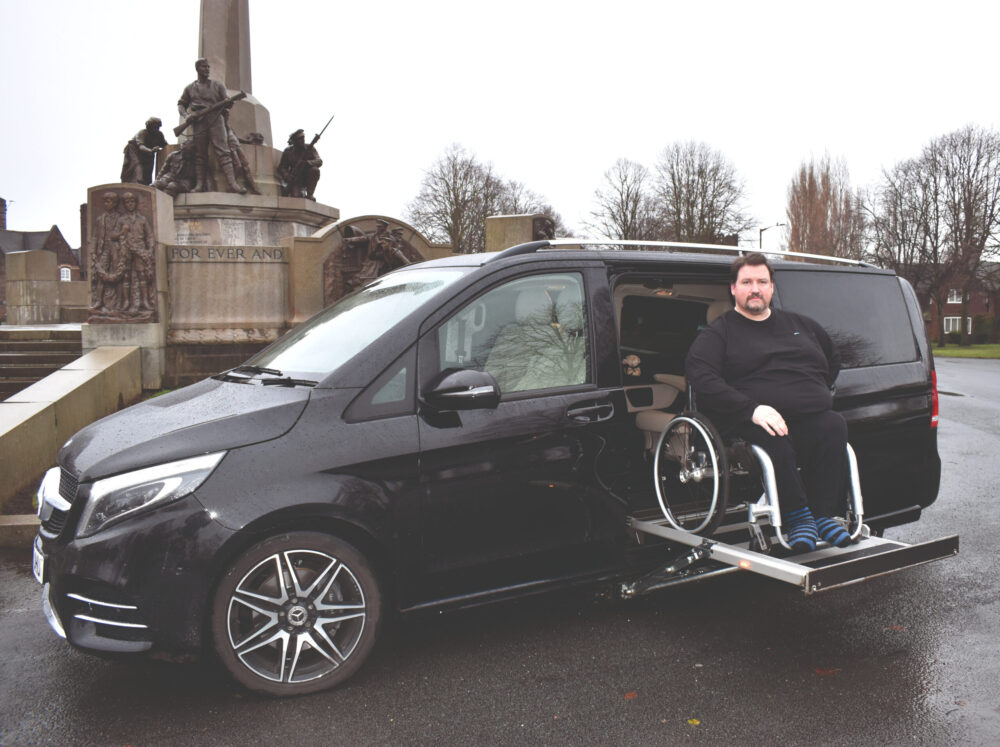
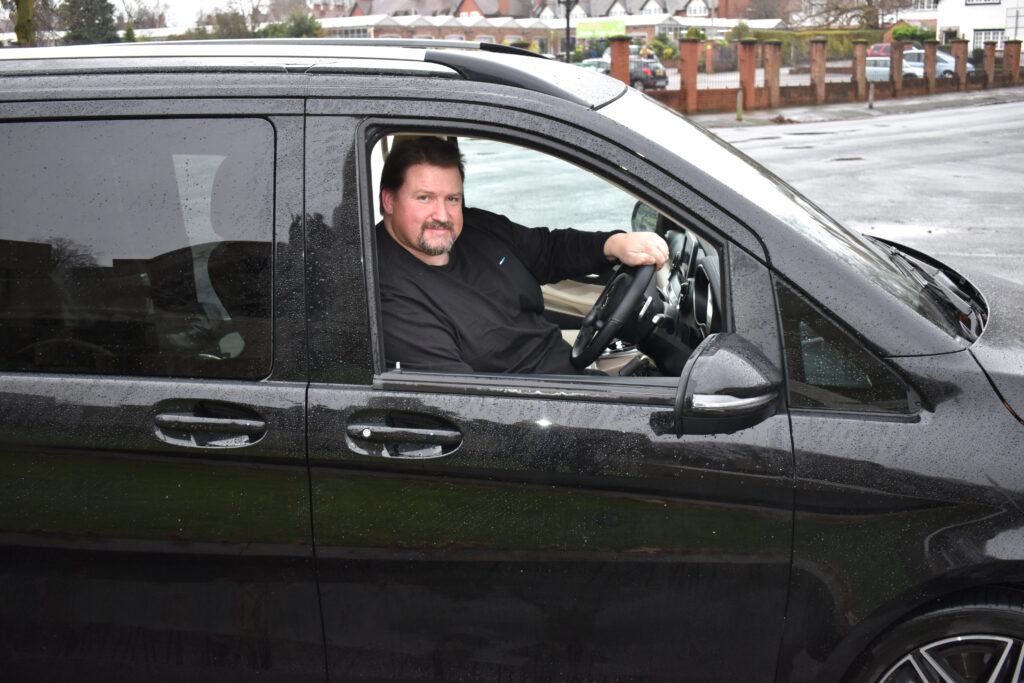
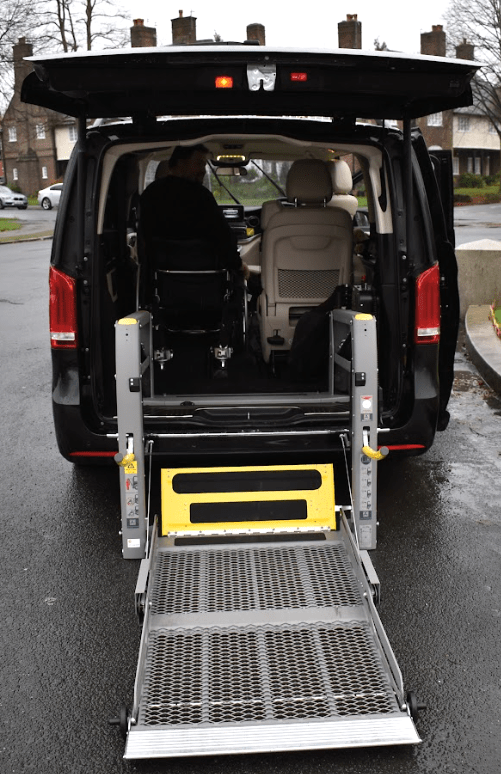
I now drive a Mercedes-Benz V-Class wheelchair accessible vehicle equipped with an AMF lift at the rear. Using a Bluetooth controller, I can operate the lift while staying in my wheelchair, then fold it away and secure the vehicle using the same controller and key fob. But here’s where the magic happens: I position myself behind the passenger seat in row two, and using a 6-way powered seat, I can move the driver’s seat back beside me and adjust it for both angle and height. This allows me to make an easy, downhill transfer that minimizes stress and strain on my shoulder joints. Then I simply position myself behind the steering wheel, ready to drive—completely independently. Being able to transfer within the safety and comfort of the vehicle—in the dry, in the warm, with no heavy lifting or wheelchair breakdown—is truly liberating. It has restored that sense of freedom I remember from my teenage years and eliminated the worries and difficulties I was experiencing with conventional car transfers.
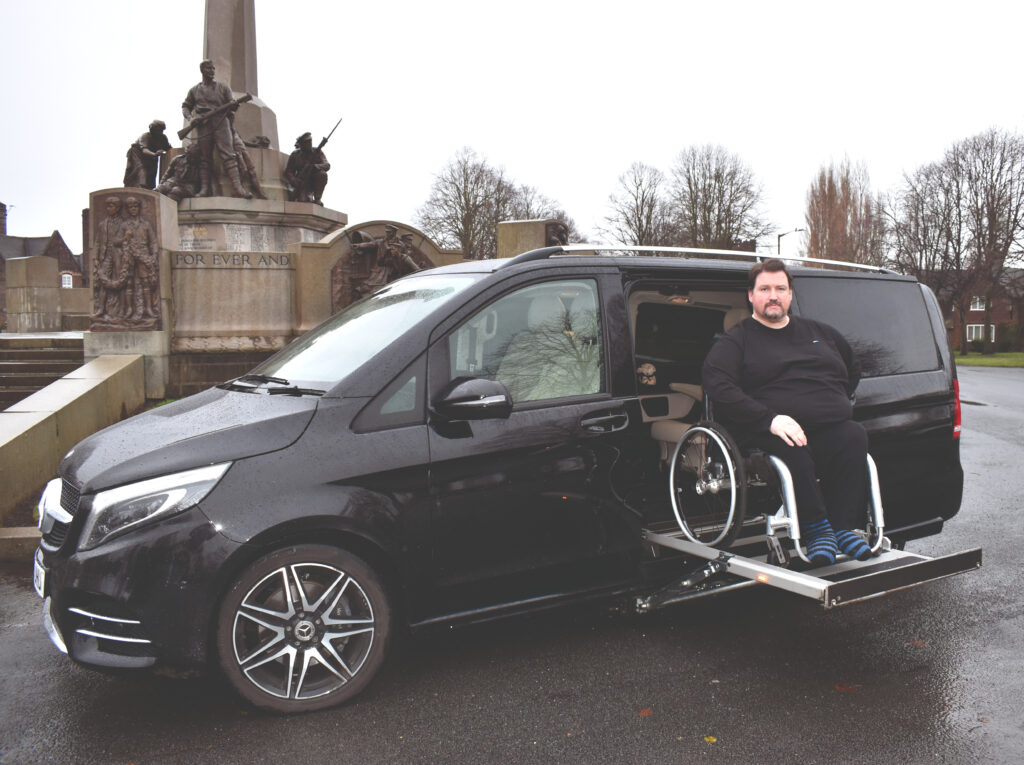
The difference isn’t just physical—it’s psychological. I no longer dread getting in and out of my vehicle multiple times a day. I don’t have to check the weather before deciding whether a journey is worth the discomfort. I don’t have to plan my day around minimizing transfers.
This experience has reinforced my passion for ensuring everyone has access to the right mobility solution for their needs. Having lived through the gradual loss of easy independence and now experienced its restoration, I truly understand how the right solution makes all the difference. My journey from that first Ford Fiesta to today’s Mercedes V-Class represents more than just a progression of vehicles—it’s a testament to how the right mobility solution can preserve and restore quality of life. It’s why I advocate so strongly for considering joint protection and long-term independence early in the journey, rather than waiting until difficulties become overwhelming.
Every disabled driver or passengers’ needs are unique, but the principle remains the same: the right vehicle solution isn’t just about getting from point A to point B. It’s about maintaining dignity, preserving physical health, and ensuring that the freedom to drive—that fundamental independence—remains a source of joy rather than a source of pain. For anyone reading this who’s struggling with transfers, experiencing pain, or simply wondering if there’s a better way: there is. The technology exists, the solutions are available, and the difference isn’t just practical—it’s life-changing.