



















Gavin Simpson asks why we condemn fish for their failure in climbing trees, when what we need is people who can breathe underwater.
I never bothered to collect my GCSE results. They meant nothing to me. I was told I would amount to nothing. I was told I was useless. And I believed them. That was until I discovered I was Autistic, that my brain worked in a different way and that despite struggling with many things, I actually had some unique gifts no one told me I had. I was always judged by my inabilities, yet no one told me I had a unique skill. I had learnt about the Battle of Hastings, I had learnt about chiaroscuro, but no one told me I was an introvert, that I had the ability to visualise and hyperfocus or that I could spot patterns and problem solve. I learned this later in life, after spending years believing I was stupid. I had been a factory worker, a tyre fitter and I drove a dustcart for nine years. I suffered most of my life with anxiety and depression. I’m now an award winning Chartered Global Management Accountant who has saved some of the UKs largest businesses millions of pounds, and I’ve started two of my own businesses to help make a difference in the world.
The system’s logic is clear—we must eradicate deficits. My school concentrated on the one thing I struggled with, and reinforced the (false) belief that I was incapable, while ignoring the hyperfocus and systems-thinking that I would later use to save a business millions. The constant pressure to be a round peg led to perpetual burnout. I found myself on the back of a bin lorry, not because I lacked ambition or intelligence, but because I had lost all faith in a system that relentlessly battered my self-worth. It drained the innate confidence I was born with and limited my possibilities.
Our education system still operates by judging complex, unique talent, the fish, on a single, outdated metric: the ability to quickly memorise and regurgitate facts in a timed exam. This test measures conformity, not capability. This outdated thinking is now economically dangerous. While schools are testing students on what AI can do, we are destroying the very skills we desperately need—creative problem-solving and strategic visualisation.
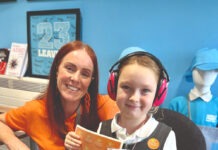
To drive growth and stop consigning brilliant talent to careers of inadequacy, we need a revolution in thought. The focus must shift from fixing weaknesses to enabling strengths. Embrace the spiky profile. Recognise that every student has a unique profile—towering peaks of genius alongside deep valleys of friction. The goal is not to fill the valley, it is to build a bridge over it, allowing the student to operate entirely from their peaks. Let’s enable their genius and give them strategies for their weaknesses and not judge them by them. Audit the environment. I learned that poor performance is an environmental failure, not a personal failure. Educators and parents must identify the environmental triggers (noise, unstructured tasks, rapid transitions) that sabotage a student’s focus and then strategically remove them. This is as simple as allowing noise-cancelling headphones for deep work or providing structured templates for complex tasks. Think about how best each individual can process the information you give them. Validate the Genius. Educators must actively provide the objective evidence of a student’s unique value to defeat Imposter Syndrome. If a student struggles with written essays but excels at complex system visualisation, validate that visualisation as the superior, future-proof skill.
The most profound realisation on my journey from the bin lorry to becoming a Chartered Management Accountant was the power of one person. My former teacher, Mrs. Cooper, the only teacher who ‘got me’ and ignited a little spark that stayed with me for all of those years. I have recently been back in touch with Jane Cooper after 30 years. She remembers my quirkiness, my obsessions and my difference and recognises them in many current students.
The future economy needs people who can breathe underwater and see patterns in the stars. We must stop judging the fish by how high it can climb. Let’s shift our focus, to see the genius in the child, rather than the deficit.