




















Emily Gabrielle on Alternative and Augmentative Communication (AAC), a range of solutions which support people who have no or limited speech.
AAC can be used instead of speech (Alternative) or alongside the speech someone has (Augmentative). AAC can be electronic, battery powered, paper-based, or use no kit at all. Some AAC uses just letters or words, but a lot of AAC solutions use special symbols which represent different words or ideas. There are different symbol sets available, and often schools or settings will have a particular symbol system they use.
How people use AAC varies depending on personal circumstances. Some people may have a medical diagnosis which means using spoken language can be difficult or impossible. Some people have speech but then lose some or all of their speech as their condition progresses. Other people may have neurological or developmental conditions which can affect their speech. There are also some people who do not need AAC all the time but need it in short periods—for example when recovering from an illness or medical procedure, or at times when it is too difficult for them to use their speech.
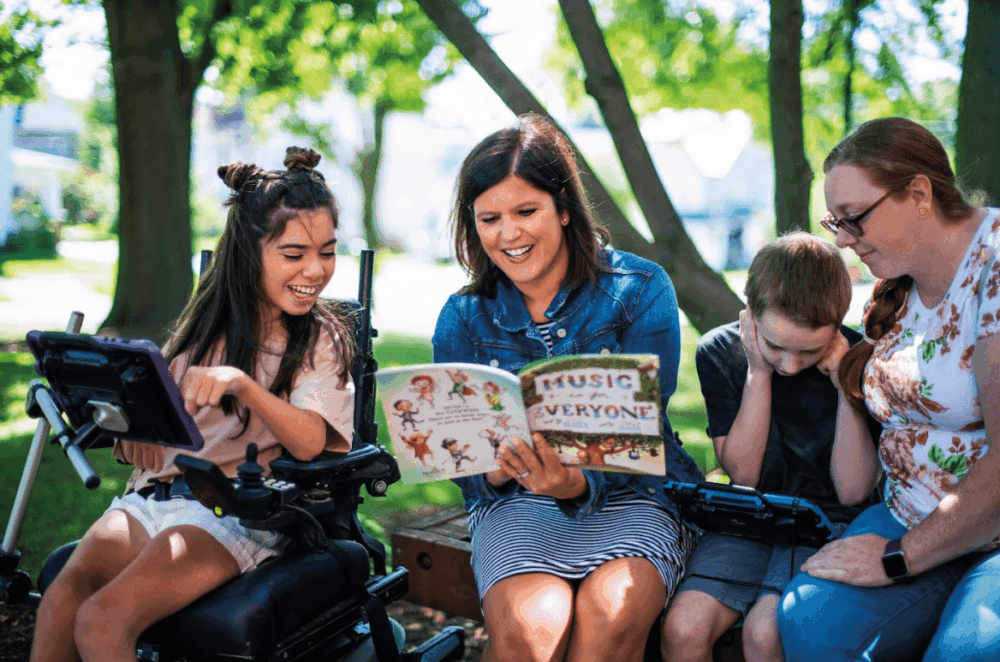
There are lots of types of AAC and no one AAC solution is better than others—each type of AAC has things that can make it a good fit for someone. That’s why it’s important to look at different options. And think about the specific needs of each person who is considering AAC. Involve them and their family and anyone who supports them, such as education or care staff, therapy teams and support workers. Consider what you want the AAC solution to do. Is it to help someone take part in a particular routine or activity or is it something we are hoping the person can use across their day? How would the person access AAC? Can they use their hands to touch it, or would they need to use something else, such as pressing a switch to choose, or using their eyes to point? If they can walk, how will they carry the AAC device with them through the day? If they use a wheelchair, where will the device go? What words do they want or need? Use words which are both meaningful to the person and can be used in diverse ways. Some people only need a few words at the start, but then, as their skills develop, they need more. People’s needs change over time.
Unaided AAC
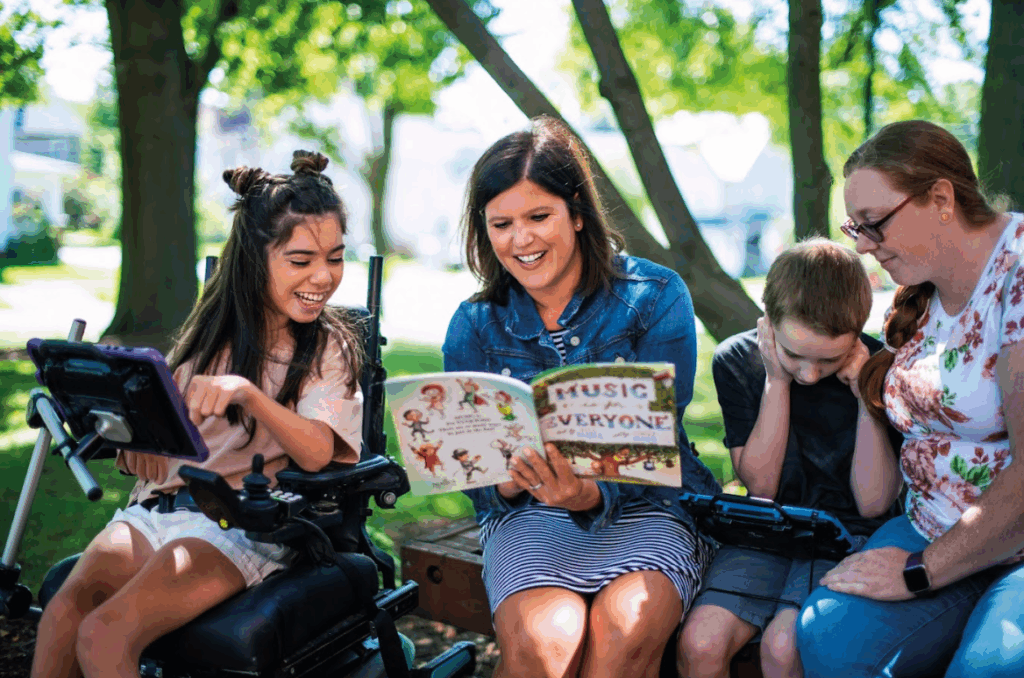
Unaided AAC is a great low-cost solution. In fact, many of us who use speech also use unaided AAC to communicate. It can include facial expressions, body movements, gestures or signing. Signing is a form of AAC where we make shapes and gestures with our hands to communicate words and ideas. Signing is a good, low-cost solution, however, if someone struggles to move their hands, it may be difficult. For signing to be a successful AAC solution, the people a person is signing to need to also know the signing system.
Low tech AAC
Low tech or paper based AAC uses equipment which does not require any power such as batteries or electricity. There are many different options, but common ones include a book containing symbols or photographs, a board with some symbols on, or a belt or apron with symbols on or objects which are meaningful for a person. These solutions are relatively simple and low-cost to create and can be easily personalised. To be used successfully they need someone to be focussing on the person using the system, so they can see the pictures the person is pointing to.
Mid-Tech AAC
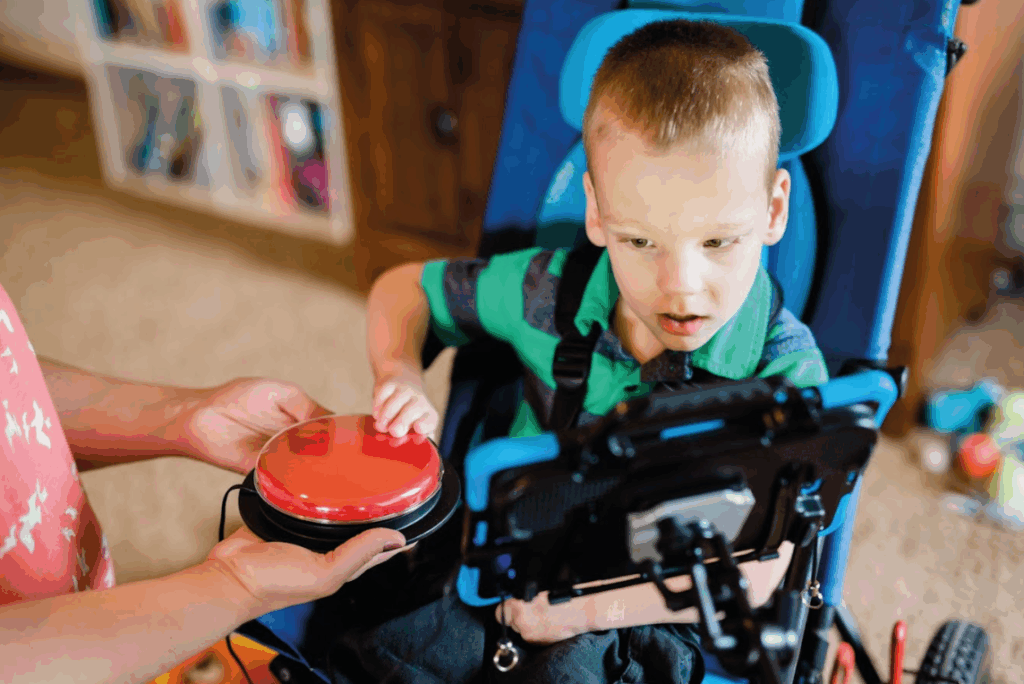
Mid-Tech AAC refers to communication devices which are usually battery powered, and which have a voice output (ie when you use it, it makes a sound or speaks). Mid-tech solutions can vary in how complex they are, from a single button you press and which speaks, to a board of different symbols which speak different words when you press the different symbols. There are many mid-tech solutions to choose from. Mid-tech solutions usually require you to record the words or sounds you want to use into them yourself. You also may need to create paper symbols or grids of symbols yourself to put on them. They are usually simple to programme and relatively low-cost—although more complex solutions can be more expensive.
High Tech AAC
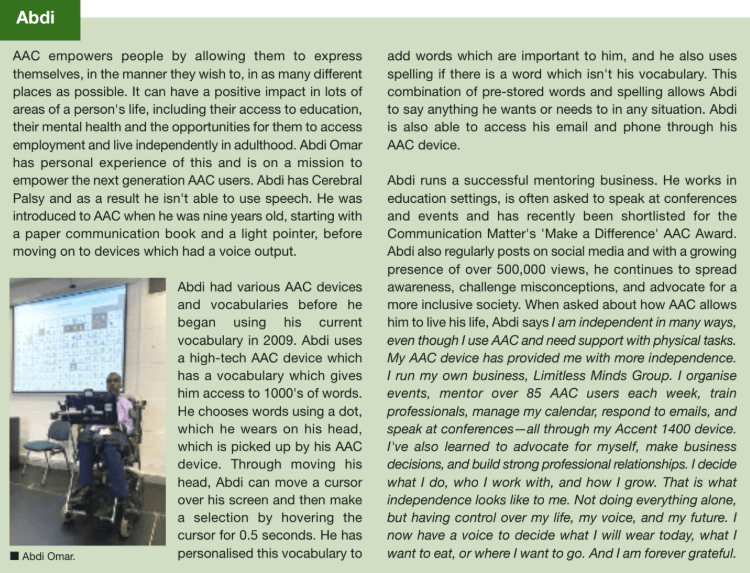
High Tech AAC refers to more complex devices which are usually charged up from the mains (like you would a tablet or phone). They have built-in language systems consisting of many symbols or words, called vocabularies, which you can personalise. The screens are usually dynamic, meaning that when you select a picture the display changes to show you more words. High tech devices come with synthesised voices already built in—and most devices now have the option to download regional voices or even create your own synthetic voice from a donor, or some of your own speech if you have some. High-tech devices provide a person with a lot of words quickly, giving them the opportunity to create more in-depth sentences and communicate easily across settings and activities. You can often use high-tech AAC devices to do other things too, such as control a computer or electrical devices, or use apps and social media. They can sometimes feel a little more challenging to customise and programme but the providers of high-tech devices usually provide support and training for you to help you become confident.

Success with AAC
Learning to use AAC is not a sprint but a marathon. It takes time to build skills and make the connections between the words which are being used and what happens as a result of using these words. It’s important that if you are supporting someone to learn AAC that you use the AAC yourself. This is called modelling and is an important process to build skills. When we model, we select key words on the device alongside our own speech. We don’t demand that the person learning AAC uses their system—instead, we show them how it can be used in the hope that over time they will begin to use it themselves once they see the impact the AAC can have. We need to model often, across the day to build language connections. Whatever AAC solution is used, it’s important that those supporting the learning feel comfortable using it too. So, ensure everyone who will be modelling the device takes time to practise using it—if possible by accessing training or support from AAC companies or others who know how to use it. While it can feel overwhelming, approaching AAC with a positive, enthusiastic attitude and being prepared to have a go, without worrying if things go wrong, will have a huge positive impact for the person learning the system and will ultimately lay positive foundations for the person’s future using AAC.