














By understanding primitive reflexes, and how they can be encouraged to integrate, can ease the lives of many of our children, writes Niki McGlynn.
Primitive reflexes are movement patterns which all babies make as part of their development. Technically primitive reflex movement patterns begin in the womb and integrate into the central nervous system at varying stages over the next two years. Problems arise when this process doesn’t happen and retained primitive reflexes have an effect on mental, emotional and physical expression, particularly in people who are neurodivergent. Well integrated primitive reflexes mean that you can move any part of your body without another part having to get involved, so you should be able to move your head without your arms getting involved or your legs without your chest having to move along too.
Primitive reflexes develop and integrate sequentially. If a reflex is retained earlier in the sequence, subsequent reflexes may remain active or retained in the system. Reflexes can be retained through stress or illness in pregnancy, IVF (which is stressful), twin pregnancies because of reduced movement, trauma to the baby during delivery, trauma immediately after delivery and lack of freedom of movement in the early weeks and months of the newborn. There is also an inherited susceptibility in reflex retention.
Identifying retained primitive reflexes makes a huge difference to how we approach children. For example, appreciating that they feel unsafe because of a retained Moro Reflex, they may manipulate their environment in order to feel safer. This gives a very different emphasis to a child who just appears difficult. The same can also be applied to parents as reflexes can be retained throughout life. In order to help here is a brief overview of the primitive reflexes which affect children the most.
Fear Paralysis Reflex is the first of the reflexes to develop, this reflex will shut children down, stop them from being able to speak out, or speak at all if nervous. This is often seen in extremely good, quiet children, who don’t want to get told off because they don’t want to draw attention to themselves. They will struggle with friendships, tending to isolate themselves and will struggle with anxiety which will lead to them being unable to move at all. School refusal, breathing problems, allergy issues, fears and phobias can also be present, with an underlying sense that the world is not a safe place. The Fear Paralysis Reflex is followed by the Moro Reflex. Often these two reflexes will flip between each other. The Moro reflex will excite the system and we recognise this as fight-flight. For example, children who have an active Moro Reflex will perceive everything as an attack and will literally run away or kick back, physically or verbally. The world feels unsafe and anyone could be an enemy. With a retained Moro Reflex, transitions are particularly difficult, from the house to the car, from the car to school. This is the reflex of big emotional meltdowns. It also affects sensory processing problems, noise, light, smells, textures can all feel overwhelming and elicit an exaggerated response. Tummy aches, allergies and breathing problems can be affected by the Moro Reflex if it is retained and not integrated.
There are three spinal reflexes which are located in the spine and the most troublesome one is the Spinal Galant Reflex. This is situated roughly from the waist to the top of the buttocks, either side of the spinal column. It can be retained on one or both sides and if retained this area remains sensitive, so labels are irritating, as well as tight waistbands and sitting against a chair. When the Spinal Galant integrates it allows the part of the brain responsible for movement to connect, which then allows you to sit still. If this reflex is retained, then the impulse to move is overwhelming and fidgeting is inevitable. This is why tools such as wobble cushions can be invaluable—the brain perceives the movement without being too distracting. A retained Spinal Galant can also interfere with bladder control and be a contributory factor to late bedwetting. It can also affect auditory processing, so listening can be difficult.
There are three neck reflexes. The Tonic Labyrinthine Reflex affects the neck when in a forward and backward position. When forwards it will make the body want to slump forwards on to the desk or slouch in the chair, when the head moves backwards the whole body will extend backwards. This obviously causes problems with posture, upper back and neck pain but will also cause problems with coordination, information processing, spatial awareness, time management, reading and organisation. Similarly when the Asymmetric Tonic Neck Reflex is retained it affects head movement from side to side, so will generally cause problems with laterality (handedness), crossing the central midline, coordination, reading, writing, organisational skills. Typically children will turn their books to the side and write uphill to avoid crossing the midline. The third neck reflex is not a primitive reflex but a transitional reflex. This should only be functioning around the time a baby learns to crawl. However if one of the other neck reflexes is retained, the Symmetrical Tonic Neck Reflex will struggle to integrate. Although a neck reflex, it actually affects the core. Stability is often an issue, we see it in children who W sit, or wrap their legs around chair legs in order to feel more stable. All the neck reflexes affect vision, organisation and academic skills.
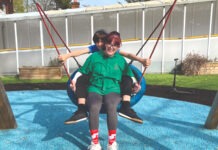
Identifying retained primitive reflexes in children and adults allows us to encourage those reflexes to integrate and then alleviate or lessen many of the problems associated with them. Reflexes are retained on a spectrum, they can be retained slightly or profoundly and the more strongly retained they are, the more of a problem they cause. Reflexes are movement patterns, so movement can encourage them to integrate, bearing in mind that order is important. That being said, all movement is helpful for brain development. The more fun it is, the better it will work. Spinning and swinging are particularly helpful, dancing and old fashioned playground games such as skipping rope and hopscotch are all good at helping reflexes to integrate—even if they are a bit outdated. Climbing, monkey bars, rolling down hills are all excellent options as well as more targeted movements. Movement programs have been around for a few years now and target reflex integration either by repeating the reflex movement pattern repeatedly, pushing against the movement pattern to reinforce it more strongly, using balance and patterns or my preferred method, using rhythm and movement to stimulate the central nervous system for better organisation. There are listening programs and brushing programs and now online computer programs.