















Play is the foundation of a happy, healthy childhood, writes Sam Williams.
In its truest expression it is a self-directed, open-ended exploration of the world. Play can take many forms, including physical activity, imaginative daydreaming and social role-playing. Play provides us with safe opportunities to take risks, to push beyond our limits, and to discover our potential. The subject of children taking risks can provoke strong reactions, but it’s crucial to provide children with opportunities to learn how to assess challenging situations, in a setting that is appropriate to their age, size and ability. Failure to acquire these skills during childhood may lead to an inability to assess danger as we get older.
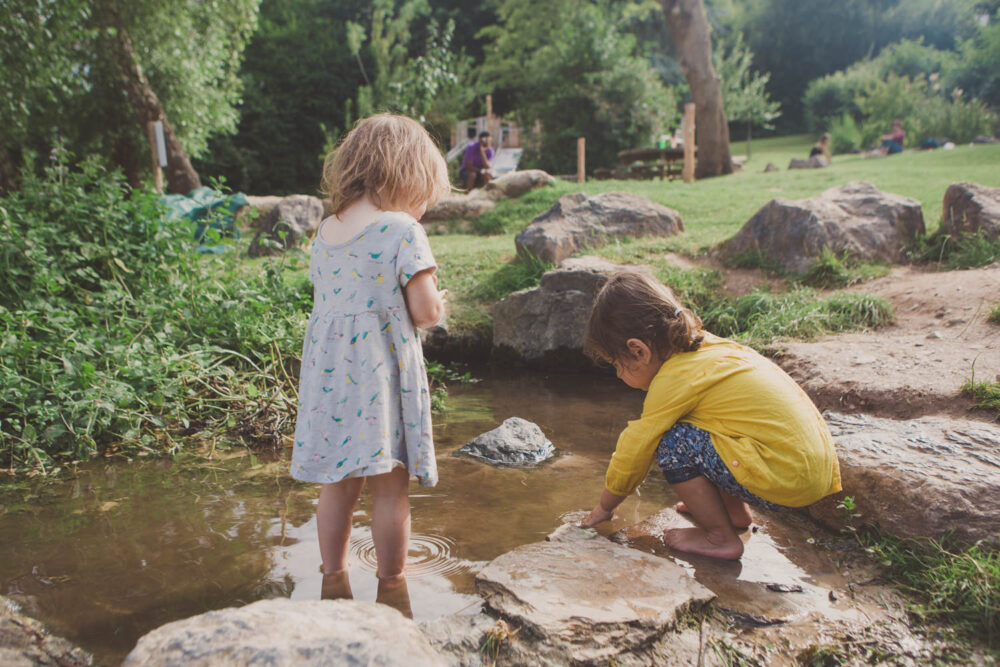
Outdoor playing can happen on a bare patch of tarmac. Playing in nature, however, has more immediate and long term benefits for children. It can engage multiple senses with unique sights, smells, textures, and sounds, while offering an array of twigs, leaves and dirt for play and exploration. These are spaces that tap into our biophilia—the innate tendency to seek connections with nature, can help with self-regulation, reduce levels of anxiety and boost creative thinking. They can even improve our immune systems.
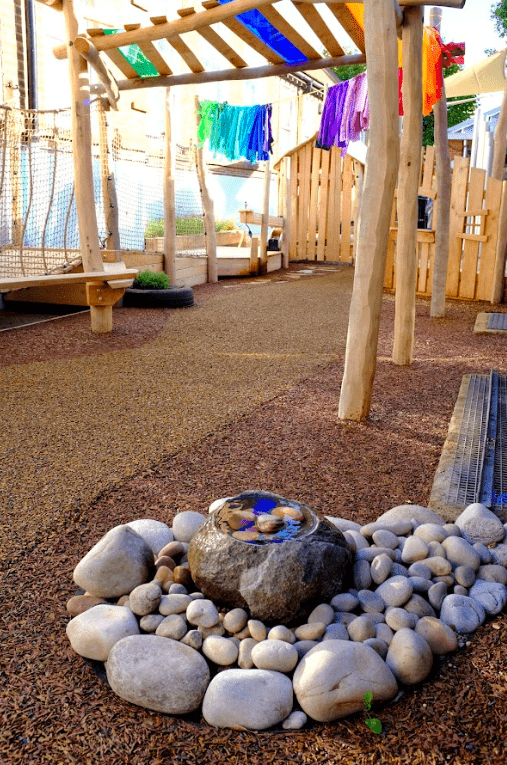
The natural world doesn’t have to be some far-flung wilderness. We can bring it closer, into our everyday lives. With a little imagination, we can find ways to incorporate nature into our parks, playgrounds, housing estates, school grounds, streets, and even entire towns and cities. The nature on your doorstep, that you see and experience throughout the year, can have a far more meaningful impact than some remote location that you might only visit once.
Parks and playgrounds can be reimagined as miniature forests, with all sorts of planting, trails, and natural materials that inspire exploration and discovery. Housing estates can become sanctuaries for wildlife with opportunities for residents to interact with nature. School grounds can become outdoor classrooms, where children learn amidst vegetable patches, butterfly gardens, and composting stations, building that sense of environmental responsibility from a young age. Green infrastructure such as sustainable drainage systems (SuDS) and urban forests that connect fragmented habitats can mean that towns and cities not only support wildlife but also help mitigate the impacts of climate change, improving air and water quality, resulting in a more attractive and resilient urban environment. By embracing these nature-rich, or biophilic, design principles, we can create local, accessible spaces that enhance our physical and mental well-being, foster a sense of community, and inspire a deeper appreciation for the natural world.
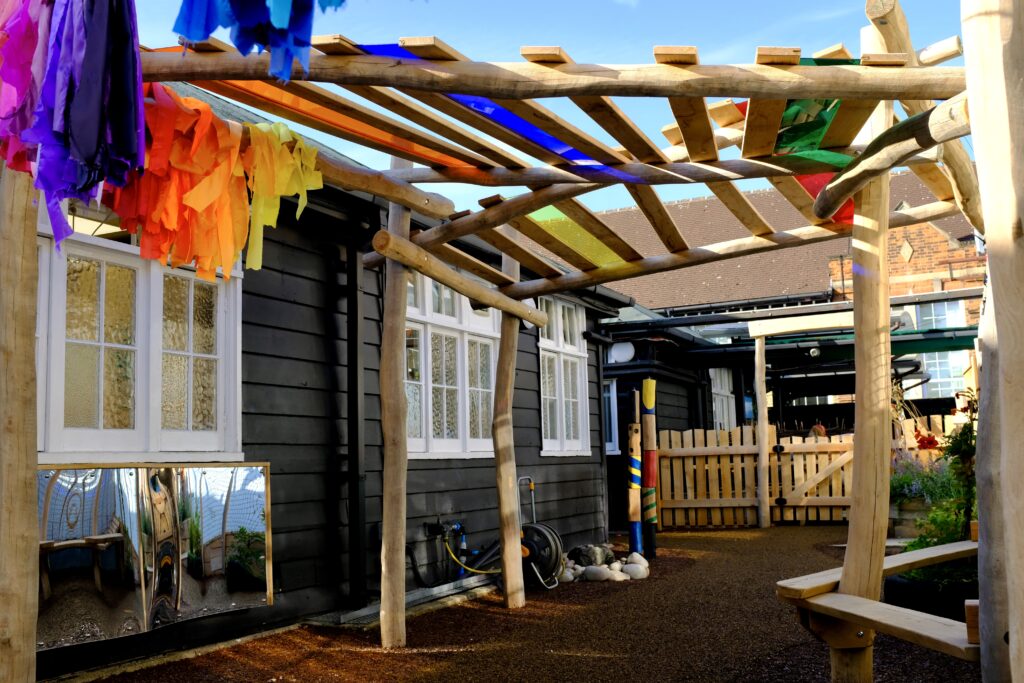
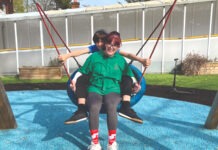
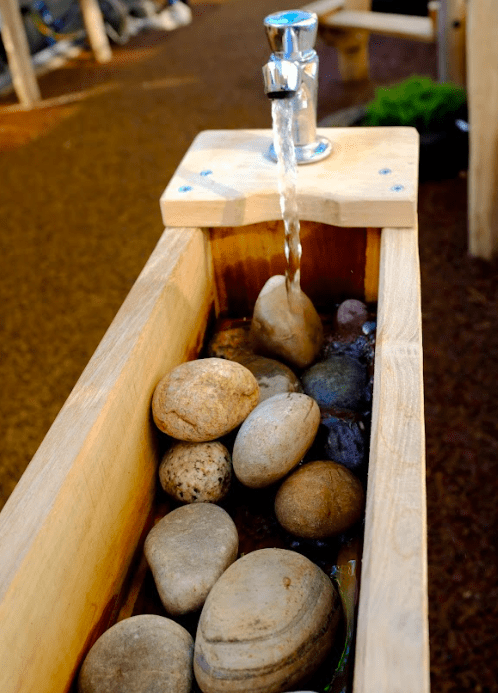
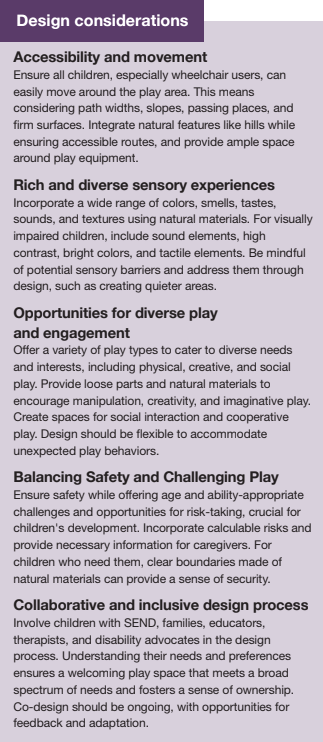
Accessibility and inclusion are not simply matters of following regulations and checklists. We need to think beyond ramps. We need to ensure seamless integration of equipment and experiences that cater for the needs of all users from the outset. When this doesn’t happen, it can lead to features that are not only ineffective but can further isolate and segregate users. When creating an inclusive play space, i’s crucial to achieve a balance that accommodates a wide range of physical and sensory processing needs, beyond mere wheelchair accessibility. Mechanical play elements like sand bucket hoists or water channels and treasure trails often appeal particularly to children with autism spectrum disorder. High contrast design elements enhance visual appeal and improve navigation for those with visual impairments. Strategic rope handles and multi-level decks encourage creative play and assist those with mobility issues. Ample seating and shelter from the elements are essential for people with low muscle tone, carers, and all users. Communication boards can remove barriers for children who have hearing difficulties, are pre or non-verbal, or between children speaking different languages. They can also prompt all sorts of games. These are just some of the features which can contribute to a play space that works better for everyone.
Questions for design
- How much risk and challenge can we provide, while keeping it safe?
- If paths need to be wheelchair accessible, then are there things we can do with the textures and gradients to make it more fun?
- Where and how do people find out about the play space? Visual descriptions of what to expect on a day out there can be useful.
- What is the journey to and from the play space?
- If an accessible bathroom is not possible, can we signpost to the nearest one? Wayfinding in general has to be clear and consistent, otherwise this too can become a barrier.
- Clear boundaries around a space can offer a reassuring sense of enclosure, but also confinement. Can we use hedges and other natural materials to soften the edges to make it work for everyone?
- Are there ways we can make it clear that assistance dogs are welcome through signage and maybe provide water?
Sadly, one of the biggest challenges cited by the parents and carers we speak to is other parents. Judgemental looks and critical comments about different or impulsive behaviour, however subtle and uninformed, can be devastating for the individual on the receiving end.
By making it clear that these are spaces where everyone is welcome, the design of a play space, its signage and any online content about what to expect when you visit can go some way to preventing these unfortunate scenarios.
Despite the challenges, the benefits of natural play for children with SEND are undeniable. By creating inclusive and accessible natural play spaces, we can empower children to explore their potential, develop their skills, and connect with the natural world in a way that enhances their well-being and enriches their lives. And change is happening. We increasingly hear from clients asking for more accessible and inclusive play. Project briefs are asking for more consultation with more diverse groups. These are all positive signs, but there is still so much more to be done. As parents, carers, teachers, and designers, we all have a role to play in creating play spaces that are not only captivating and engaging, but also inclusive, safe, and accessible. This will ensure that all children can experience the wonder of playing in nature.