













Relaxed performances are an important step, but we can go further, says Flossie Waite.
The year is 1625, and you’re at the theatre. You can smell gingerbread and beer, incense and sweat. Under your feet are nutshells and sand. The theatre is open to the elements. You can feel the sunshine, but it’s threatening rain. Hundreds of candles illuminate the stage. The crowd is cheering, booing, singing, heckling, chatting. There’s constant movement. People are leaving and coming back in. Food vendors are touting their wares. Around you are characters from all walks of life, from servants to nobles. It’s a multi-sensory, relaxed experience.
In the theatre of 2025, the audience sits in a darkened room, silent aside from their occasional applause. They are passive recipients of a visual and verbal performance. Some snacks are tolerated, but the rustle of sweet packets is frowned upon. Latecomers are turned away.

Theatre doesn’t have to be this way. What if theatre appealed to our body and our brain? What if all responses were welcomed and celebrated? What if all performances were relaxed?
It’s over ten years since the term relaxed performance started being widely used in the theatre industry. These days, it is common for a show’s run to include at least one relaxed performance. As a general overview, this means audiences receive information in advance about what to expect from the show, and they are told that it is okay to move around and make noise. There may also be changes to the lighting and sound, and a Quiet Space made available, among other elements.
Relaxed performances have undoubtedly had a massive impact. They have made going to the theatre more accessible for disabled, autistic and neurodivergent children, for their families and school communities. But as others, like the reviewer Lyn Gardner, have said, does the existence of specific relaxed performances reflect assumptions about who theatre is for?
Everyone should have equal access to theatre. Relaxed performances are an important step on the road to making this happen, but we can go further. We can re-imagine what theatre is, creating shows for and with audiences, and putting access at the heart of the creative process, rather than as an added layer for some performances at the end.
Sensory theatre is a living, breathing, fully feeling artform that can make theatre more accessible and inclusive. It’s a type of theatre that was first made in the UK in the 1980s, and it has continued to grow. Sensory theatre takes what we all love about going to a show—sharing a communal experience, connecting with the performers, being immersed in a different world—and dials it up.
With sensory theatre, access is embedded from the start. The creative process begins by thinking about young people who experience the most barriers to accessing theatre first, and build out from there, rather than considering access at the end once a show is made.
All of this leads to an experience that doesn’t just appeal to your brain, but to your whole body. Treating every sense and way of experiencing the world with equal respect levels the playing field, so that all audiences are given equal opportunity to experience and enjoy the performance. It’s close-up and interactive, relaxed and audience-led, immersing audiences into whole new 360° worlds, as their whole selves. All interpretations and responses are welcome and celebrated, which makes for a truly communal experience.
What’s it like?
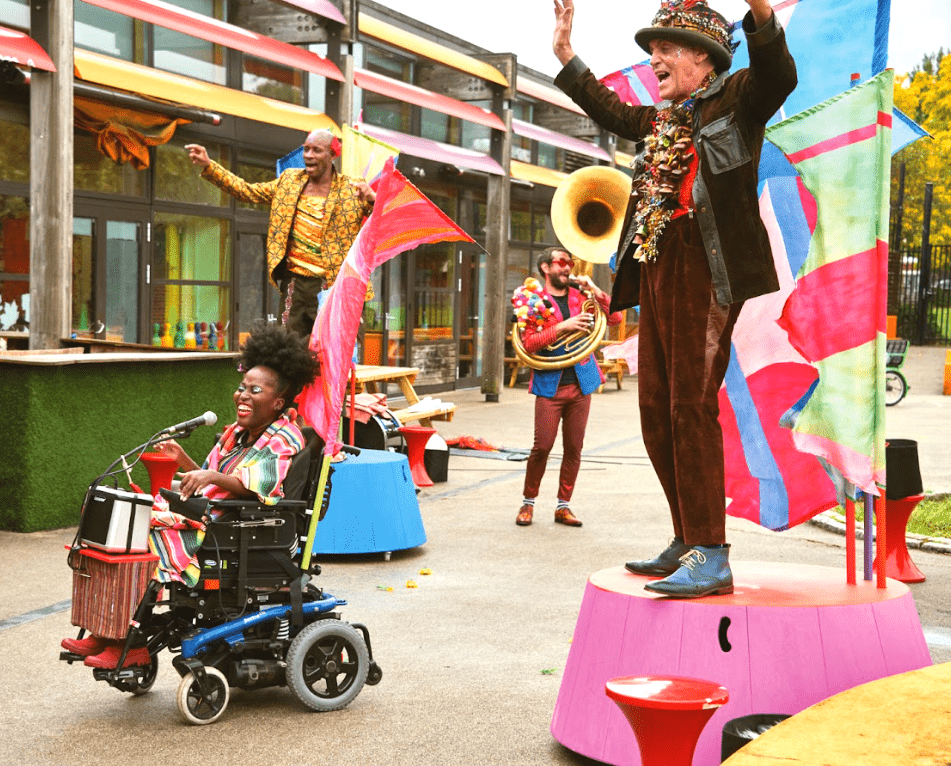
Well, a sensory show uses not just five but up to thirty-three (that’s right, thirty-three) senses to make experiences that are truly beyond words. It is as much about texture, taste, colour, weight, movement, vibration of sound, temperature and touch as it is about words and visuals. Expanding out to all these senses can take shows to all sorts of places. Performances can happen in a hydrotherapy pool or on a family’s doorstep, on a trampoline or in a library, sent through the post or even up in the air.
Audiences tend to be small, for instance six young people at a time. This means that the performance can happen both up close and further away, so it’s accessible for a range of fields of perception. The performers can be responsive to the audience, following what they’re interested in, and tailoring the experience to their way of being in the world.
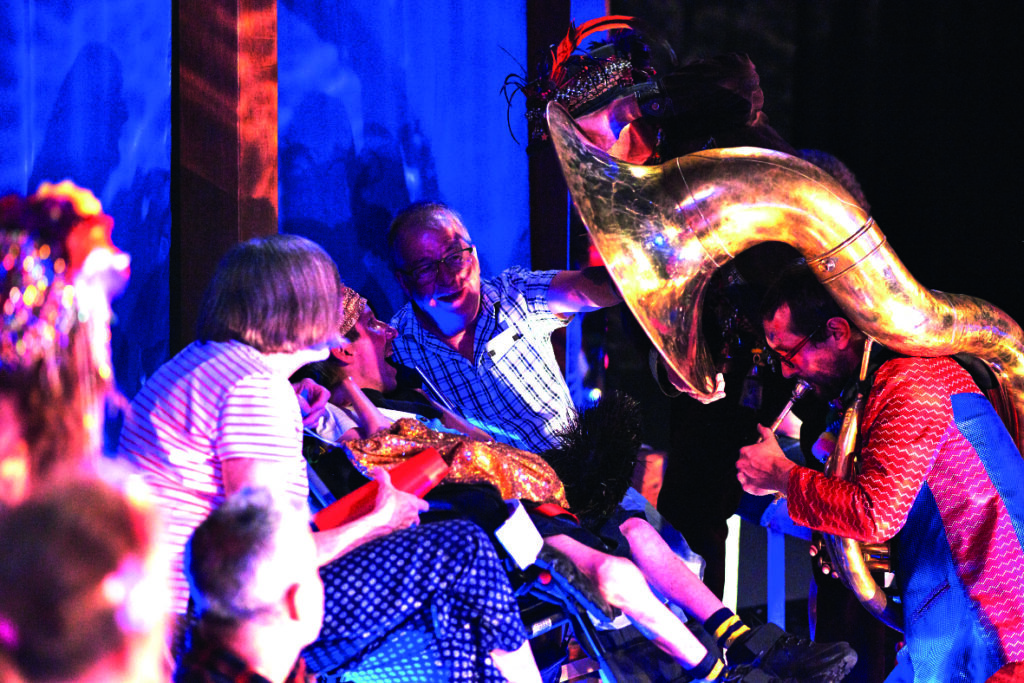
The joy of theatre is that it’s live but short-lived, an unrepeatable moment to be treasured by the people who were there. Because Sensory theatre is interactive and guided by the audience, each performance is a unique collaboration between performers and audience.
As with relaxed performances, audiences are welcome to move around, make noise, leave and come back. But even with Relaxed Performances, or shows that are considered accessible, there’s almost always an access cut-off point. The content of the show is not adapted to make it cognitively accessible. As well as thinking about physical, attitudinal and social barriers to accessing theatre, Sensory theatre deeply considers cognitive access, for instance, making sure the pace of the show leaves plenty of space for different processing times.
Specialist schools have played a hugely important role in the development of sensory theatre. The discovery which really set the sensory ball rolling was learning about the kinaesthetic sense—the sense of movement—from seeing students enjoying being rocked and bounced in hammocks. Our first kinaesthetic shows took place in school hydrotherapy pools, and the influence of staff and students has never dimmed since.