








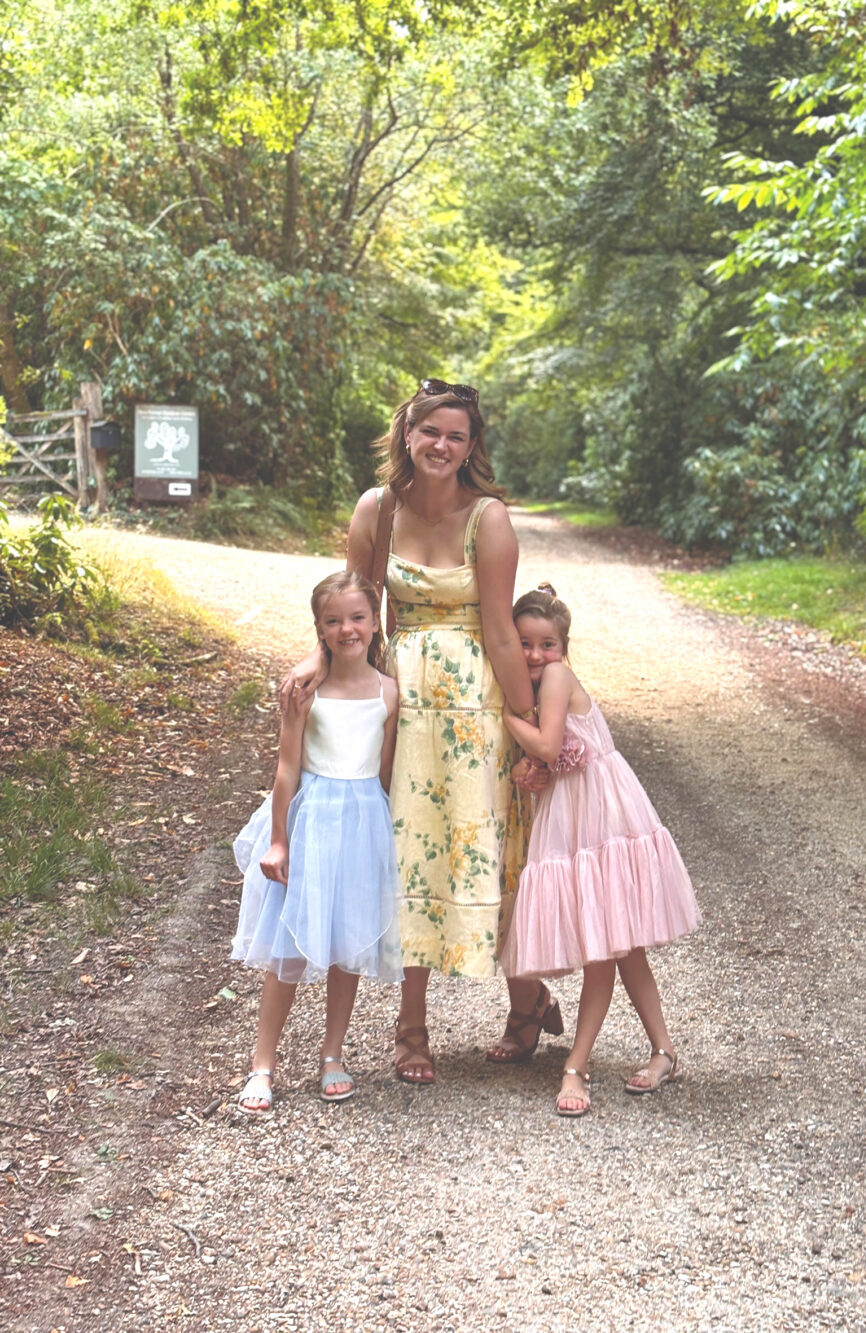
The external challenges and private successes of Tilly Hawkes.
When Ada, my youngest daughter, was in her early years, communication was extremely difficult. As she exited babyhood and entered the toddler years, she became a little ball of frustration and anger. It was very difficult to manage her expectations and her understanding of situations, and she would sometimes become a danger to herself.
As a deaf child, Ada couldn’t communicate her needs and wants properly, nor could we communicate reasons and context. Everything was at its most basic level, if we even had the language at all. I used to feel like I’d lost my baby and my relationship with her. This was in stark contrast with our Hard of Hearing (HoH) daughter, Lyla, who was born hearing and developed glue ear. Lyla developed speech quite early and became a real chatterbox. Her love of reading contributed to her communication, and her language developed very quickly. We were always able to explain Lyla’s environment to her in a way that she understood, and we never struggled with communication barriers or tantrums. I do believe this was largely due to easy communication. Even if she didn’t like the answer, we could give her a reason she could comprehend, which kept her much calmer and more secure.
Ada was flagged in the newborn hearing screening and, at eight days old, she was diagnosed with congenital CMV, which is the leading cause of non-genetic deafness in children. A week later she was diagnosed with mild-moderate deafness. Years later, we found out that she had most likely been profoundly deaf at birth, and that this had been missed due to the crisis of quality control in national audiological services. She was immediately fitted with hearing aids, which we now know weren’t set correctly and most likely gave her no access to sound.
I was devastated. Having just had the diagnosis of CMV, which is utterly terrifying for any parent, I was really frightened for Ada. As a result, I didn’t really process her deafness properly for about eighteen months—I was so overwhelmed by fear for her future and her wellbeing.
We asked our Teacher of the Deaf (ToD) if we should learn British Sign Language (BSL) and were told “no, a bit of Makaton to support speech development will be sufficient”. It is my greatest regret that I listened to this advice for so long, but I trusted the experienced professionals to guide me in totally unchartered waters. The result of this was that Ada developed no communication and suffered from (and still suffers the results of) language deprivation and a language delay.
Once she was diagnosed as profoundly deaf, after countless inconclusive routine hearing tests, Ada was referred for cochlear implants. This time our ToD advised that BSL would be the most appropriate mode of communication. I can’t change the past, but I’m not sure if I’ll ever reconcile this part of our journey. The impact of poor advice, and lack of sign language, has ricocheted throughout our lives and may continue to do so for years to come.
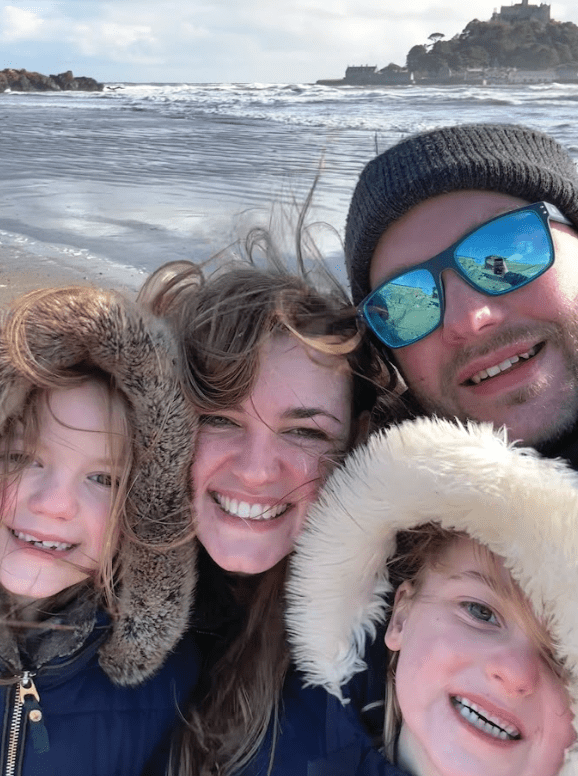
After this diagnosis, I suddenly sprang into action, understanding what I needed to do. I followed as many professionals as I could: speech and language, audiologists, teachers of the deaf, early years practitioners, and, most importantly, deaf people and other parents of deaf children. I specifically searched for accounts from which I could learn some BSL, and I stumbled across a remote Introduction to BSL course. It was during Covid, so nothing was available face to face, and it suited our family for me to be able to pop the girls to bed, go straight into our kitchen and log in to my lesson. I continued with formal learning, going through levels 1, 2 and 3, and I have recently passed level 6.
I started volunteering at my daughter’s specialist school for deaf children, becoming exposed to native deaf signers and learning how to support Ada’s education at home; for which I am incredibly grateful. As a secondary school Communication Support Worker, I will be well placed to support Ada when she attends herself. Becoming involved with our local deaf children’s society has given me exposure to the local deaf community.
Small things that I had taken for granted with Lyla became huge wins with Ada. I remember the first time she was able to communicate to me that she wanted her hair styled in a particular way and the enormity of the moment made me emotional. Tiny milestones are evidence of massive progress.
So I do have a mother-daughter relationship with Ada. I use what my older daughter has access to as my yardstick for what Ada should have access to. I am thrilled that, because of sign language, tailored education strategies, and the right social provisions, I feel they have equity.
Not all parents have the money or opportunity to devote their time to immersing themselves in sign language in the way I have. Parents put their trust in professionals. It’s time we armed those professionals with the knowledge and resources to empower parents to learn sign language as an integral part of their deaf child’s care. There’s such an imbalance at present and not only is it sad, it’s damaging.
Ada is the only deaf child in her entire family, but this has not stopped every member from embracing her as she is and learning to communicate with her. I hope that our family can be an example to others that it is possible to give your child BSL as a communication mode equal to speech. Our example only goes so far: it must start from the top. The responsibility is with the government to provide it and encourage it for every deaf child. I look forward to the day this dream becomes a reality.