




















Charity funding is partly offsetting the current dearth of direct, regular, speech and language therapy in schools, but it’s a drop in the ocean, writes Tanya Smollan-Kaplan.
Direct therapy for speech and language difficulties is often only available to school children with an Education and Health Care Plan (EHCP). However, there are many children who do not have any access to speech and language therapy, as they do not meet the criteria, but they still have speech and language needs that impact on their educational attainment, social skills and self-esteem. For example, they may have delayed speech development that is impacting on their phonological processing and literacy skills, or they may have difficulty being understood by their peers and teachers. The unmet speech, language and communication needs have a knock on effect on confidence and social skills, emotional and behavioural development too.
As an independent speech and language therapist working in schools, it is inspiring to see how many schools think out of the box to find ways to provide intervention to the children who need it. I am always struck by the demands placed on the SENCO’s to look for solutions and be proactive with limited resources. Some of the solutions have included funding or supporting independent therapists, university student placements, specialist teaching assistants offering small group support, online interventions, teacher training or the use of programmes and assessments developed by speech and language charities.
Here are two examples of how grants from our charity have had a positive impact for a school and an individual who received regular weekly intervention:
Carla, a head teacher at a primary school in London, applied for a grant because they had many children who did not qualify for statutory speech and language therapy and had no means of accessing independent therapy, but had speech and language and communication needs. The school leadership wanted to address concerns of children in the early school years before long term difficulties become embedded. The two-year grant allowed the school to employ a fully qualified speech and language therapist one day a week. Over the course of the school year, forty of the children with an identified need, and who fell below threshold for statutory speech and language therapy, were able to benefit from face to face intervention as a result of the grant. Nine teaching assistants attended the sessions so that they could increase their skills and continue to deliver support for the interventions. In addition, the speech and language therapist ran workshops with parents to help them understand early language acquisition and be clear what to expect of their children. There was a strong relationship between the speech and language therapist and staff in school, with constant sharing of information and collaboration. This created a culture of mutual respect and teamwork, which was reflected in the extent of the support which the children received.
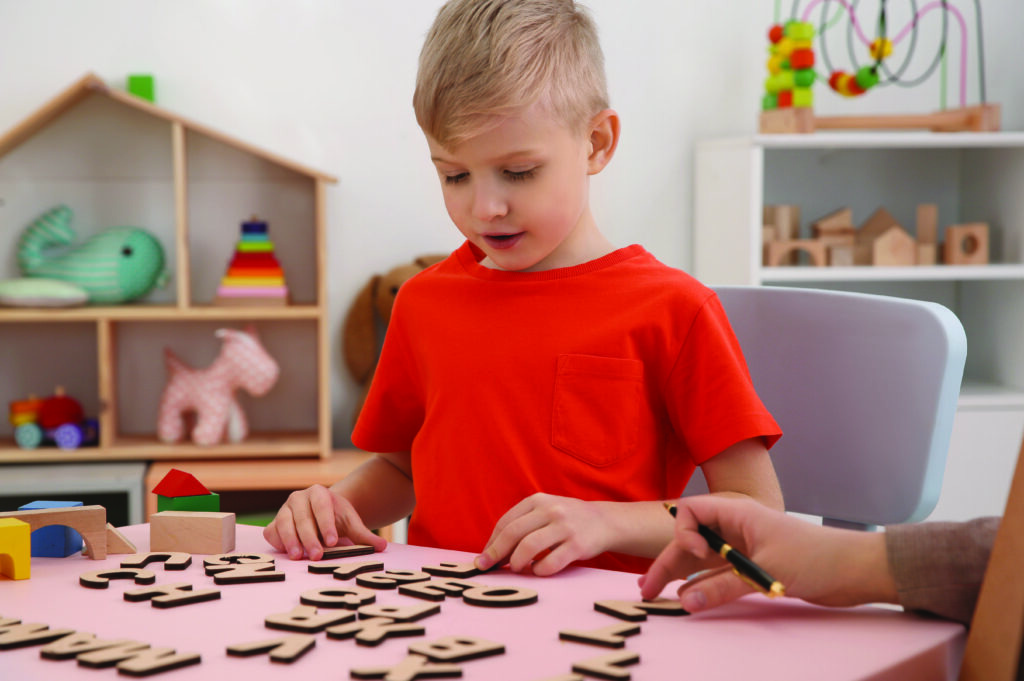
Tom was born just before the covid pandemic. His developmental milestones were delayed, so he was referred to speech and language therapy. His mother attended a Parent Child Interaction (PCI) programme when he was nearly four, where he was identified as having social interaction difficulties. His mother attended another online communication group. When Tom started Reception class, he was discharged from the Early Years Speech and Language Team. He was seen next, aged 5 years and 4 months, at his school for an initial assessment. Tom was diagnosed with a significant speech difficulty, which was making it difficult for others to understand him, in addition to an autism diagnosis. Following this assessment, Tom was given a programme to be worked on indirectly at school and at home. It was recommended that he have daily practice sessions with a teaching assistant.
The school found this challenging to implement and Tom’s frustration and anxiety were increasing, Due to increased pressure for speech and language therapy it is often the case than an indirect programme of therapy is given and needs to be implemented at school and at home. In a report by Speech and Language UK, based on a survey of teachers, they found that: 53% of teachers don’t believe they have enough training to support pupils’ speech and language in the classroom. In addition, the Health and Care Professions Council (HCPC) standards of conduct, performance and ethics state explicitly that You must only delegate work to someone who has the knowledge, skills and experience needed to carry it out safely and effectively and you must continue to provide appropriate supervision and support to those you delegate work to. Due to the massive challenge for both the schools and the overwhelming demands placed on the speech and language services whose resources are limited, this is often the only way that therapy can be offered.
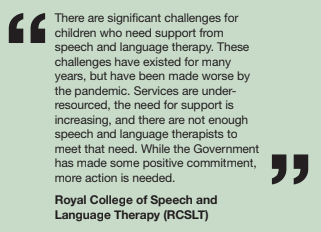
Tom’s school received a grant to provide speech and language therapy to the children who needed intervention but were not receiving any support. He is one of twelve children who receive weekly speech and language therapy with an experienced speech and language therapist. The therapist models therapy for Tom’s parent and a teaching assistant so that they can also support the intervention, and he is receiving eighteen weeks of direct and regular therapy, reducing frustration and increasing his ability to communicate at school and at home. Tom enjoys the sessions and he benefits from the regular intervention.
Schools have been innovative in the ways that they used charity funding to have the greatest impact. Although this initiative is only a drop in the ocean of the vast need for speech and language therapy to support children with speech, language and communication needs in schools, the evaluation of the limited grants highlight that children, who otherwise would not have had any specialist help, have been given an opportunity to make progress.