












Severely disabled children can enjoy cycling and become very good at it despite the challenges, says Bob Griffin.
Tom’s mother loved him unconditionally. In return, he demanded her every waking moment and many of her sleeping ones, too. Welcome to Angelman’s Syndrome. One day she said, “If only we could tire him out”. I’d spotted a dusty trike at the back of the garage, but apparently he couldn’t steer it or operate the brakes. He also had no danger awareness. As an engineer, I enjoy a challenge, so three months later I’d built him a trike his mum could remotely steer, brake and control speed—all tasks beyond Tom’s understanding. He pedalled away with great enthusiasm and excitement, cycling several miles on his very first ride—not just in the safety of the school hall but on the open road, with the sun shining and birds singing. It was an emotional day. Sometimes we just need to take away the obstacles, and a child’s natural instinct to succeed will do the rest. For Tom, I took away the decision making, leaving him to get on with what he could do well—pedalling (though he would still insist on steering through puddles).
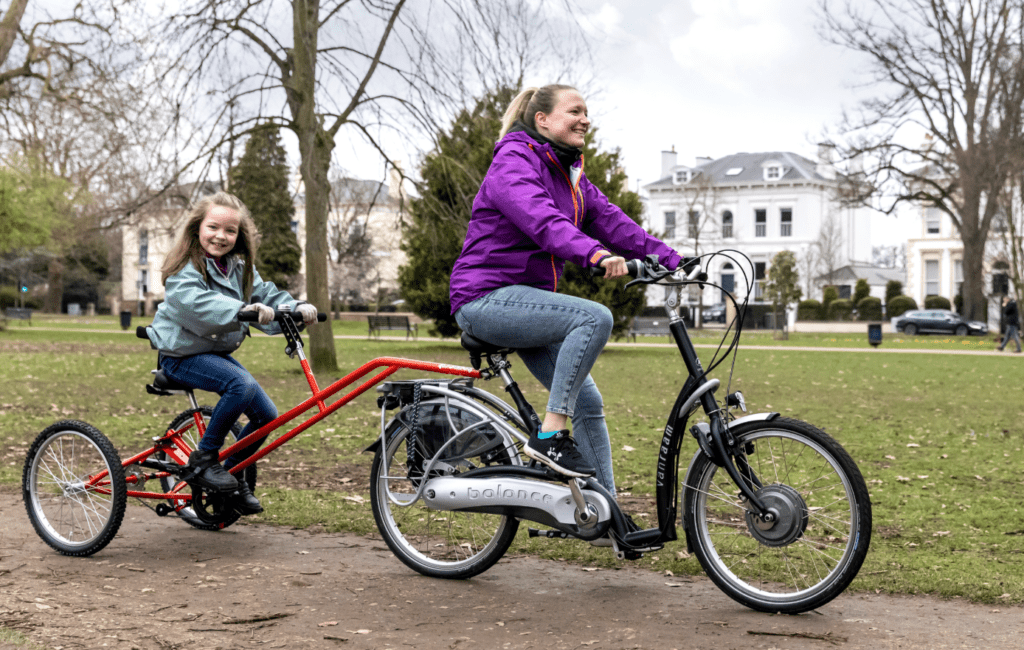
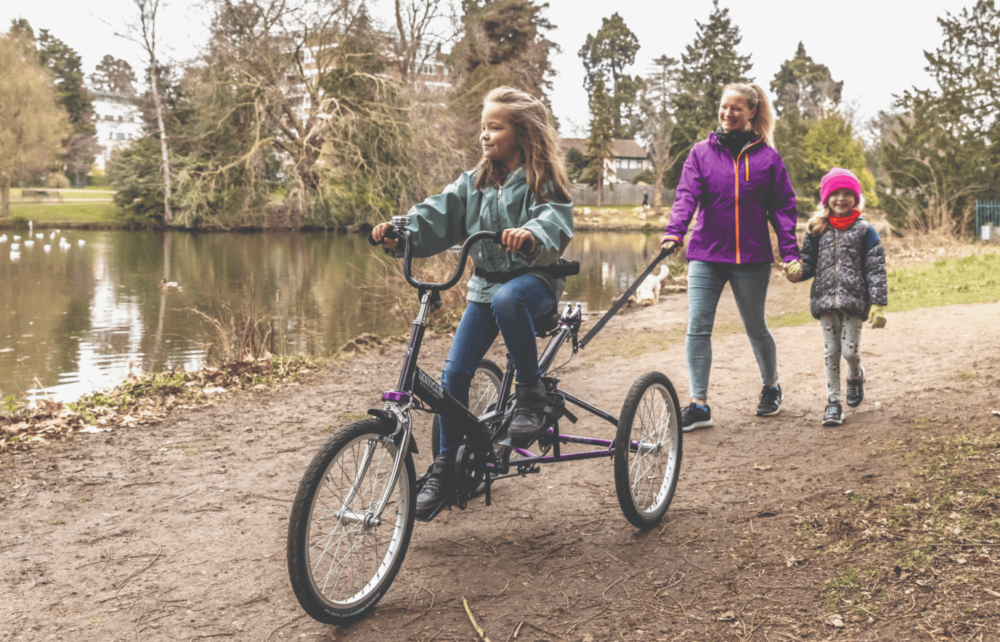
The problem isn’t the rider—it’s the trike. Tom’s friends, each with their own unique problems, all wanted a trike like his. I was fascinated with the obstacles they faced, and the challenge of building a machine that can work in harmony with them. Family is important too—children with a disability need a support team, and support equipment needs to be easy to use and easy to store. A trike should be light yet robust, geometrically perfect for the user, take up little space when not in use, and most importantly of all, it should be easily transportable. Getting disabled children cycling is about synchronicity between the rider, the trike, and the family.
You might think that learning difficulties would be a serious barrier to coordinated cycling, but they’re not. As long as the trike has good geometry, gear ratio and single-speed drive, most children will intuitively cycle. An inquisitive, mischievous mind and a fun-loving personality will do the rest. An autistic child may find it difficult to adopt something new like a trike, but once accepted, the trike becomes a precious, constant companion, able to calm and persuade. With patience, autistic riders do well.
An inability to walk does not mean an inability to cycle. On a trike, the body weight is supported by the saddle, and the trunk by accessories, leaving the legs free to pedal with much less effort. And pedalling can improve tone and coordination, which may in turn lead to walking. Regular trike riding during the formative years can be life changing.
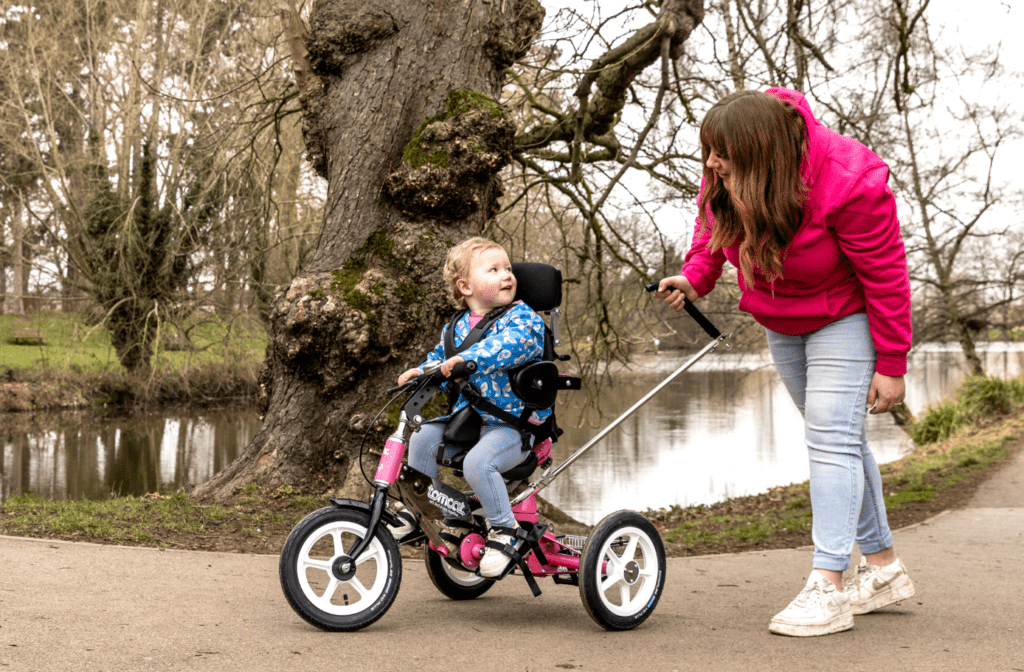
Disability, particularly in the formative years of childhood, can be complex and comprise more than one condition. So when designing a custom trike, it’s important to take into account the child’s growth and future prognosis. A good trike is like a tailored suit; it just feels right and looks good without you really understanding why. A good cycling posture is essential: spine straight, eyes straight ahead, extended leg slightly bent, contracted leg (thigh) horizontal, and forearms horizontal. When setting up a high-sitting trike with a saddle, set the saddle height first, then the height and reach of the handlebars. Crank length is critical for good posture. With the saddle adjusted so the extended leg is slightly bent at the knee, the crank length will be perfect when the raised leg is horizontal, too short when the knee is low, or too long when the knee is high.
Leg support accessories (calipers) have their place, but work towards cycling without them because they deny exercise to the joint they are supporting (typically ankle or hips). Use calipers until the rider is a competent cyclist and general strength has developed, then ween them off, using them to work the joint naturally. Ankles can be balanced by sliding the foot supports to the best point of balance.
A child with a heart condition, low stamina or epilepsy may suddenly need to stop pedalling. This is a problem with a fixed drive, as pushing the trike home will make the pedals turn. A switchable axle disengages the drive so the trike can be pushed to safety.
We recently adapted a trike for a little girl who was born with no hands or arms—only shoulders. She was beginning to realise she was different from her friends, and she was becoming withdrawn and unhappy. She wanted so much to be able to cycle like her friends, but that seemed an impossible dream. We made her a tight-fitting waistcoat with straps at the shoulders running down to the handlebars that became taught when she leaned back. By rotating her shoulders, she was then able to steer, and a back-pedal brake resolved the braking. It was simple engineering for us but meant the world to her. Her smile lit up the school hall, and there wasn’t a dry eye in the house.