
















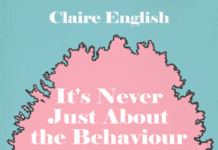






I don’t think that I am unusual in being both a SENCO and a mother to a child with dyslexia and ADHD. My husband also has ADHD. Many of us seem to get into the field of SEN through a necessity to learn about neurodivergence in order to support our loved ones. That is certainly what happened to me and subsequently led me to becoming a dyslexia specialist and author of a book for neurodivergent children. Yet, despite that, it still took me most of my child’s school life to help get his specific learning differences identified.
That is why I feel it is important to say to other parents that, when you are not observing through an objective lens, it can be tricky to notice if a child is displaying neurodivergent traits. I want to tell my story in the hope that it will reassure other families that it’s never too late.
Daniel was a ray of sunshine, from the minute he was born. Happy, balanced, bright and full of giggly, gleeful energy. I instantly fell in love with him and we bonded like superglue when I separated from his father and became the main carer. He was certainly stimulated. From crafting almost on a daily basis with anything I could lay my hands on, to being outside, playing sports or made-up games together and, often, just sitting on the sofa laughing at each other’s silly faces or making fart noises at the TV. I felt proud that I was raising such a bright and engaged child.
Even when it came to bedtime reading, he adored being read to and would always know when I’d missed a line from his favourite story, incisively pointing it out to me, as I gave a faux apology and carried on, looking forward to a well-earned rest after a full day’s work. He also loved to write stories. We collaborated on one he’d imagined all by himself called, The Magic Ball, about a football with superpowers that could transport Daniel and his friends to enchanting places. I’ll never forget his face when I presented him with a typed and bound copy, showing his name on the cover as the esteemed author.
Starting school was a great thrill for Daniel. I felt lucky that his happy and kind nature naturally drew other children to him and I could tell that he would settle in well. That is why, when he began to lose his confidence, it was such a stark contrast for me. I remember being quite taken aback that he was being given homework and measured in quite a ‘strict’ manner for his reading ability at aged 5. The whole thing felt unnatural and I observed a marked change in his nature when he was attempting to complete weekly tasks demanded by the school.
His previous love of reading diminished rapidly. And I am ashamed to say that, as a single parent who perhaps felt more acutely keen that my child should fit in, I gently pushed him to do things like finishing a book, when he was clearly becoming distressed that he could not pronounce or understand every word.
I was told by his teachers that, although he excelled in other areas, his reading and writing were a little below what was expected for his age. But I shouldn’t worry, they said. He was left-handed (?) and they were sure his reading would ‘come on’.
Our precious reading time together soon morphed into a dreaded exercise in me trying to get him interested in the book and him finding every excuse not to read it. I could feel his little body tensing against me as I started the story. The joy that he had once felt never really returned and for the next couple of years, I sensed a cloud of shame hanging over him when it came to reading.
Of course, I shared my feelings with his teachers. I even asked if he could be dyslexic but this was instantly rebuffed by the school. What did I as only ‘his parent’ know about such things (bearing in mind this was still some years before I gained a Postgraduate in Dyslexia Research and Practice). So, I accepted the school’s decision and we moved on with life.
Thankfully, Daniel’s positive nature largely carried him through primary school. High school was another matter altogether.
Through my work and studies, I have seen that many children can find strategies to mask their neurodivergent traits, through feeling an implicit pressure to assimilate into neurotypical society. But this is almost impossible to sustain when studies become more academic in nature. There is, quite literally, nowhere to hide.
Again, Daniel had no problem making friends. He was instantly popular, with his peers and teachers alike. And then, six months in, the pandemic hit. Within a few months of starting high school, he was instantly (like millions of children) confined to his bedroom. His ‘school’ became a laptop balanced on his knee and all teacher instruction took on a homogeneous, digitised format. I’m going to be frank—learning was minimal to non-existent.
We cannot underestimate the negative impact that lockdown had on our children, but for many with a neurodivergent brain, it was a disaster. When Daniel returned to school full time, the signs that he was experiencing learner stress because of processing and sensory overload revealed themselves starkly within weeks. He would arrive home and instantly need to go to bed, often falling asleep for 2-3 hours. If I asked if he had any homework to do I would get a sharp, “No”. “Ok”, I thought to myself, “He’s just a typical teenager.”
Then parents’ evenings began, and a creeping realisation hit me that we were being told, almost word for word, the same well-meaning phrases (used by all teachers when they are trying not to worry parents) that we’d heard throughout primary school. “Daniel is a lovely boy, he is really polite but he can get quite easily distracted.” “Daniel asks lots of questions but he hasn’t completed the majority of his homework.”
Again, with the benefit of my training, I can clearly see a pattern that highlights many a dyslexic child who may be fully engaged in speaking or practical activities, but becomes quickly overwhelmed, using avoidance tactics when faced with academic literacy tasks.
I had started to get involved in learning support where I work and had even qualified as a specialist dyslexia tutor by the time Daniel was at high school but, because of my experience with Daniel’s primary school teachers, I was reticent in approaching the school to ask if they could investigate for a specific learning difference.

This is something that I still feel guilty about. Why didn’t I speak out? But it’s amazing when something is so close to home, how you find a million excuses for why your child is struggling.
What eventually led to Daniel being screened by the school was that he actually approached me after watching a Tik Tok video of a teenage boy who had shared what his dyslexia felt like. It was a real lightbulb moment for my son. He felt he’d finally received an explanation for the struggles he’d experienced his entire school life. When Daniel said to me, “Mum I think I’ve got dyslexia.” I felt a rush of mixed emotions. A wave of relief was followed by instant guilt and sadness, as every memory of him having meltdowns when first trying to read, to the tears of frustration trying to write high school essays, flooded my brain.
I emailed the school the same evening, making sure to add my credentials to the end of the message. I have to say, they responded swiftly and professionally, offering him an appointment with the SENCO for screening.
Following a few weeks of testing, we received a 25 page report, stating that indeed Daniel showed strong traits of dyslexia and what also appeared to be some traits of ADHD (which can commonly occur together). He was to be awarded 25% extra time and a reading pen in every exam, and an ILP was drafted to give to all his teachers.
My son has still continued to struggle at school. The GCSE year has been one that neither me, Daniel, nor his stepdad would ever care to repeat. His brain will never be suited to writing long, academic essays in a test situation and he may not come out with many exam passes.
Despite all our experiences, I know in my heart that, just as he showed when he was a young child, he has so many wonderful strengths. He has grown into a positive, funny and engaging young man (who was awarded a scholarship certificate for his outstanding contribution in classes). He is sharp, quick-thinking and resourceful. I have continued to tell him how amazing I think he is (a message I try to emphasise to all neurodivergent children, in my book). And, most importantly, school is not the end of his story. He has a whole life ahead of him to show the world just how brilliant he is.