




















Felt safety isn’t just a nice idea, it’s a neurological need, writes Jennifer Wyman.
You can feel it the moment you step into certain rooms—the hush, the warmth, the sense that here, you can just be. It’s what psychologists and educators increasingly call felt safety—an instinctive sense that the space is emotionally and physically safe.
For many children, it’s the tangible details that make the difference. Lighting that doesn’t flicker. No harsh smells. A quiet corner where no-one’s eyes are on you. The adults who meet you with a soft tone, slow pace and calm energy. These things send the message you are safe here. Only when children feel safe can they truly engage, connect and learn. When a child’s brain perceives a space or situation as unsafe, even subconsciously, their nervous system shifts into protection mode. That means elevated stress responses, hypervigilance, or shutdown. In this state, learning becomes secondary; the brain is too busy scanning for threat. For children with sensory processing differences, the safety bar can be much higher. A room that feels neutral to one child may feel overwhelming to another. Buzzing lights, echoing corridors, unpredictable noise, cluttered visuals—over time, these environments can become a daily source of stress, fuelling dysregulation, exhaustion or avoidance behaviours.
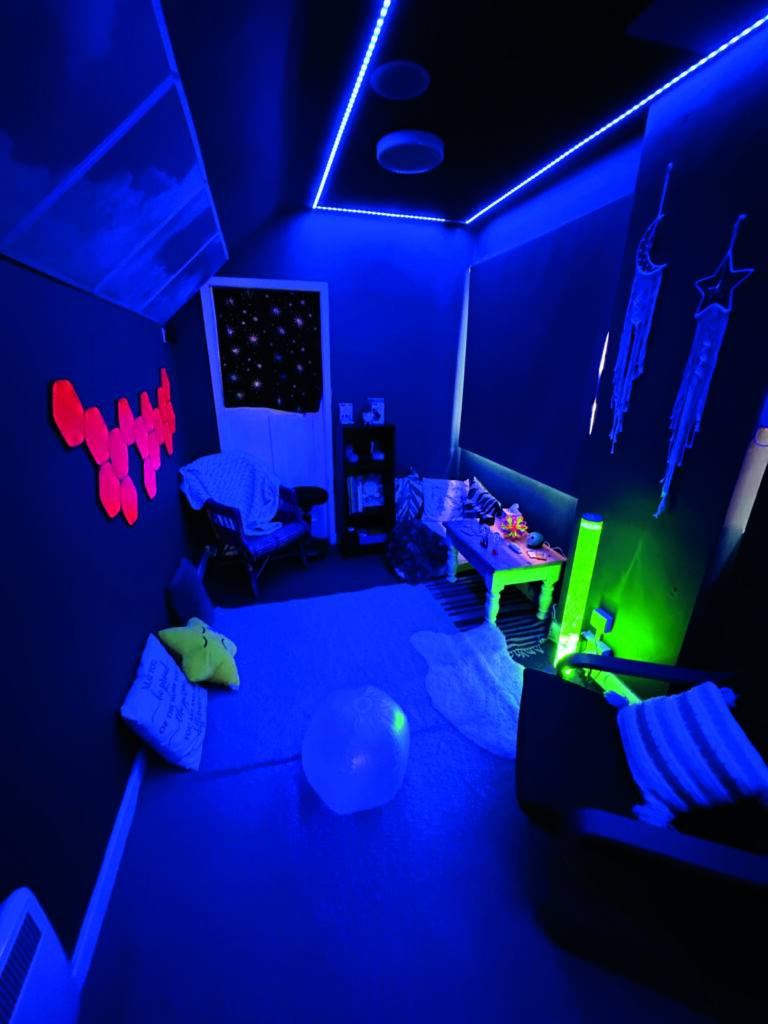
Creating sensory-sensitive spaces isn’t about wrapping children in cotton wool. It’s about recognising that access begins with regulation, before a child can focus on maths or make a new friend, their nervous system must feel safe enough to show up. For some children, even the strategies we use to help can backfire. Take the 5-4-3-2-1 grounding technique, for example. It’s a popular tool for promoting mindfulness and presence through the senses. While it can be highly effective, asking a child to focus on specific sensory inputs, like what they can hear or feel, can cause distress or overwhelm if those senses are already heightened or dysregulated. The same strategy that calms one child may trigger another—that’s the nuance. Supporting regulation isn’t about having a perfect toolkit, it’s about knowing the child in front of you, and being willing to adapt.
Safe doesn’t mean silent. It means predictable. It means that sensory input light, sound, smell, space is considered and not chaotic. For example, soft, indirect lighting or natural light reduces glare and sensory overload. Calm, tidy spaces support focus and emotional clarity. Rugs, wall panels or soft furnishings help lower background noise. Retreat spaces like calm corners offer choice and comfort without shame. Routine, repetition and structure help children feel anchored and in control.
Teachers and parents are also part of the environment, and we too have sensory and emotional needs. If we’re dysregulated, unsupported or overwhelmed, we simply cannot hold space for others. Teacher wellbeing isn’t a luxury—it’s foundational. We cannot pour from an empty cup. Just like children, adults experience felt safety in different ways. One teacher might need quiet and order; another might thrive on movement and flexibility. In workplaces, just as in classrooms, different nervous systems share space and this isn’t always easy. The same goes for leadership. Whether it’s a headteacher, a team lead, or a parent at home, when the person responsible for setting the tone is wired differently to those they support, tensions can quietly build. And because everyone is doing their best, often with too few resources and too much pressure, things can break down even when no one means harm.
That’s why we need more honest conversations. Not blame, not finger-pointing, just a willingness to reflect and adapt. Nobody who cares wants to throw their hands in the air and say, It’s impossible. I choose to believe most people are doing their best. I know I am.