















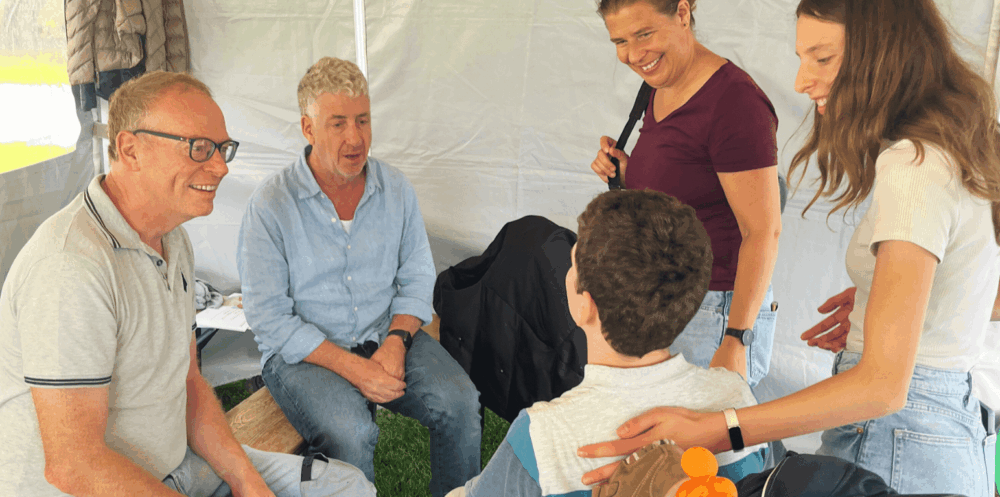
Shai Silberbusch describes a movement-based, family-led developmental therapy that can unlock potential in children with special needs.
For children with autism, cerebral palsy, rare genetic conditions, or communication delays, the journey into movement and learning is often fragmented. The therapeutic approach we have developed seeks to reintroduce a natural flow of development by returning to the basics: sensory integration, body awareness, and relationship. By ‘returning’ to earlier developmental stages through carefully guided movement and sensory experiences, children are supported in building a more robust foundation. This approach doesn’t rush to outcomes, but instead honours the child’s individual pace and rhythm, empowering them to take meaningful steps forward—sometimes for the first time.
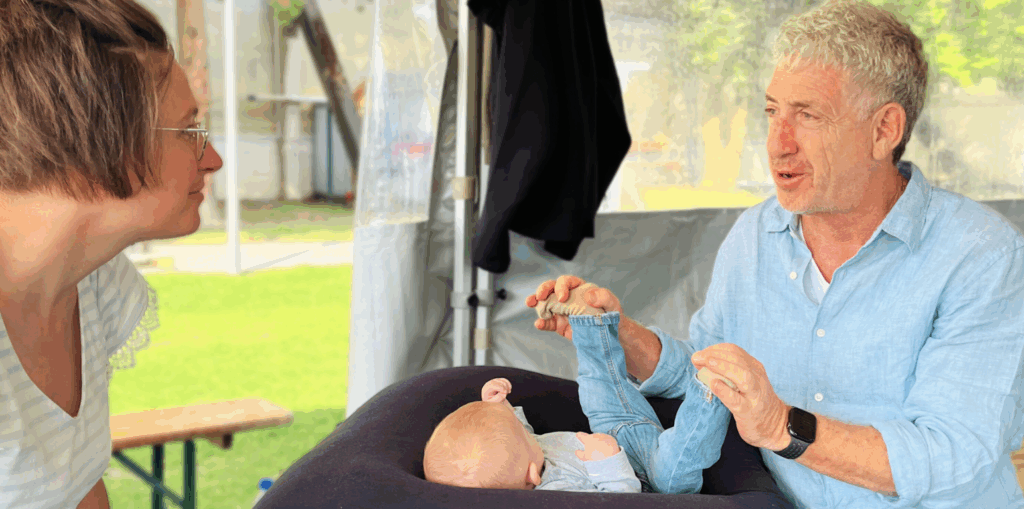
Therapy extends beyond the clinic or session; it lives in the day-to-day moments at home. Parents are not seen as passive observers, but as active partners, equipped with the knowledge, tools, and confidence to support their child’s unfolding development. Therapists work closely with families to embed learning into daily routines, always asking: What does this child need from their environment—physical, emotional, and social—to thrive?
It doesn’t require high-tech equipment or rigid routines. What it does require is presence, observation, and connection—qualities most powerful when embedded in everyday life. The method is designed to live beyond the clinic, within the rhythm of the child’s own environment. Therapy unfolds during mealtimes, during play, at bath time, and while winding down for sleep. These are the natural moments when the brain is open, the body is ready, and the family is already present. Parents are not passive participants. They are invited into the heart of the therapeutic process as active partners and observers. With gentle guidance and practical support, they learn to recognise their child’s cues, create meaningful challenges, and respond to the small signals that mark readiness for growth.
In this approach, children develop more than physical skills. They build confidence, improve attention, and begin to regulate their emotions through their interactions with the world around them. The home becomes a landscape for learning, and family life becomes the foundation for development.
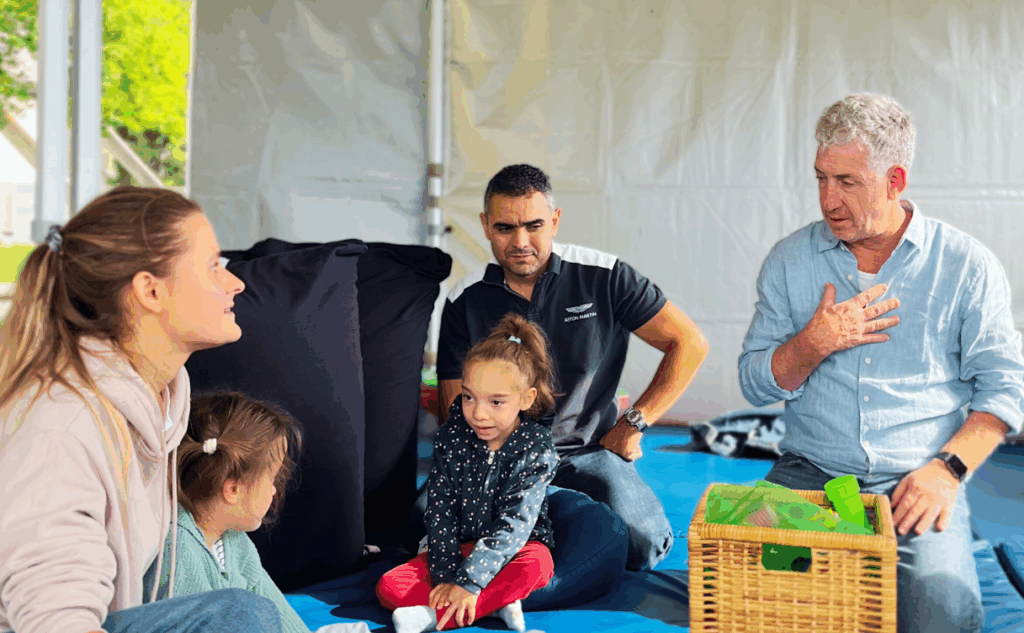
Ellie’s story
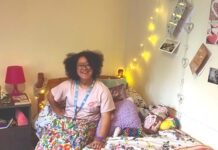
When Ellie’s parents first reached out, she was three years old. They weren’t only looking for therapy; they were looking for a way to reach their daughter. Ellie had been diagnosed with STXBP1, a rare genetic variation on chromosome 9 that impacts motor, cognitive, and speech development, and is often accompanied by drug-resistant epilepsy. Her gaze was distant, her body rigid, and despite being deeply loved, she remained mostly withdrawn from the world around her. She was observing the world like a newborn—quiet, watchful, but unresponsive. Our work began by creating a need—something that activated the child’s motivation to act. For Ellie, that need was food. With her parents’ full involvement, we created playful, low-pressure opportunities to explore taste, texture, and smell. Food served as her first motivator to reach out, to engage, to respond. From those first sensory connections emerged hand-eye coordination, grasping, purposeful movement, and eventually, the earliest forms of communication. She began expressing likes and dislikes. She reached for her mother’s face. She responded, and her development began to unfold. From lying passively, she progressed to rolling, creeping, sitting, crawling, and eventually standing and walking along furniture. Her posture softened. Her body, once stiff with extension, learned to bend, shift, and balance. She began to let go of compulsive thumb-sucking. It was gently replaced with food-driven play and object exploration. Cognitively, she became more alert and expressive. She played independently, sang along to music boxes, and interacted with toys, books, and the people around her. Her tolerance for sensory input improved—she began eating a wider variety of foods, independently and with cutlery.
The therapy is informed by the Feldenkrais Method. It doesn’t simply address delays or close gaps—it challenges us to change the way we understand development itself. Rather than focusing solely on deficits or lost time, it asks us to look deeper: to notice how a child moves, how they respond, how they relate to the space and people around them.