







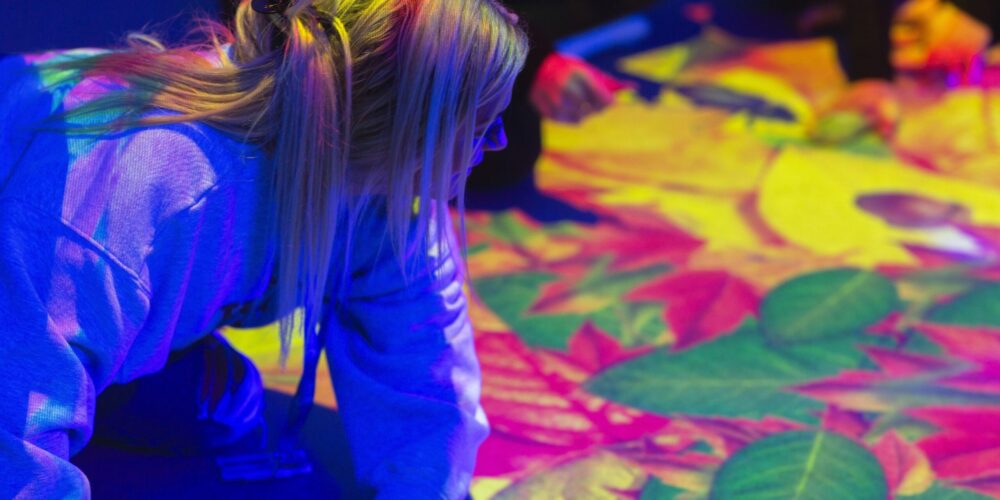
Kimberley Booth sees immersive technology as a powerful force for equality in education.
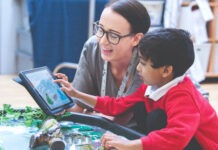
Education is changing, specifically for children with special educational needs. Immersive technology offers new and innovative ways of learning, a pathway that considers the individual needs of every child by utilising technologies such as virtual, augmented and mixed reality to bring individualised lesson plans to life.
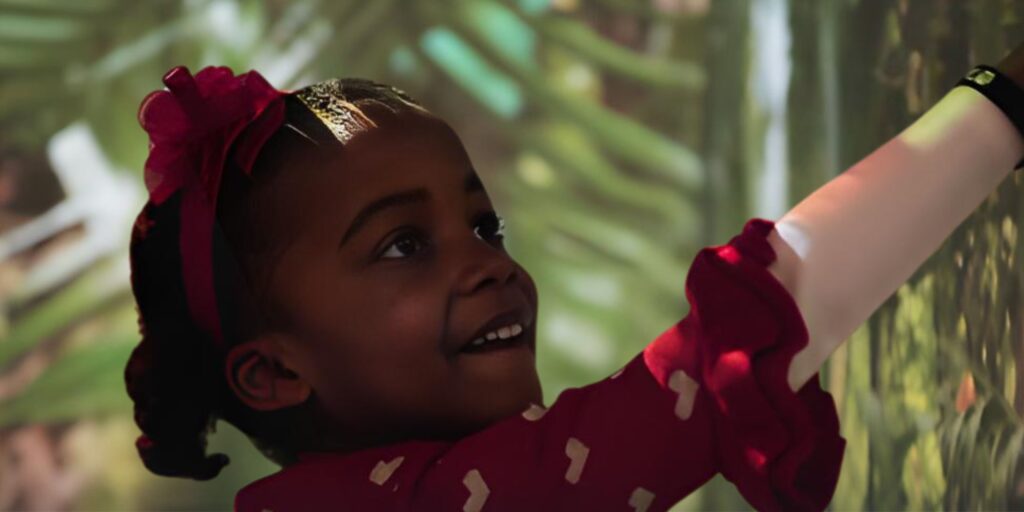
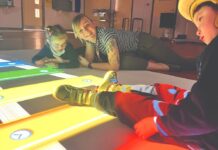
These environments are the manifestation of the drastic reconstruction of traditional learning models. As technologies continue to evolve and become more sophisticated, and children continue to explore digital worlds, innovative digital reform in education is finally being embraced. In fact, within the next ten years, classrooms are predicted to look entirely different to how they appear today. There may still be tables and chairs, and a teacher may still stand at the front of the class, but simulations through immersive technology will be at the forefront of this new era in education. Rather than interactive screens positioned on a wall to demonstrate a teacher’s thinking, students will learn through VR headsets and in some cases even entire rooms where the walls and floor are interactive and powered by VR and AR, promoting a practical environment where exploration is encouraged through multi-sensory stimuli.
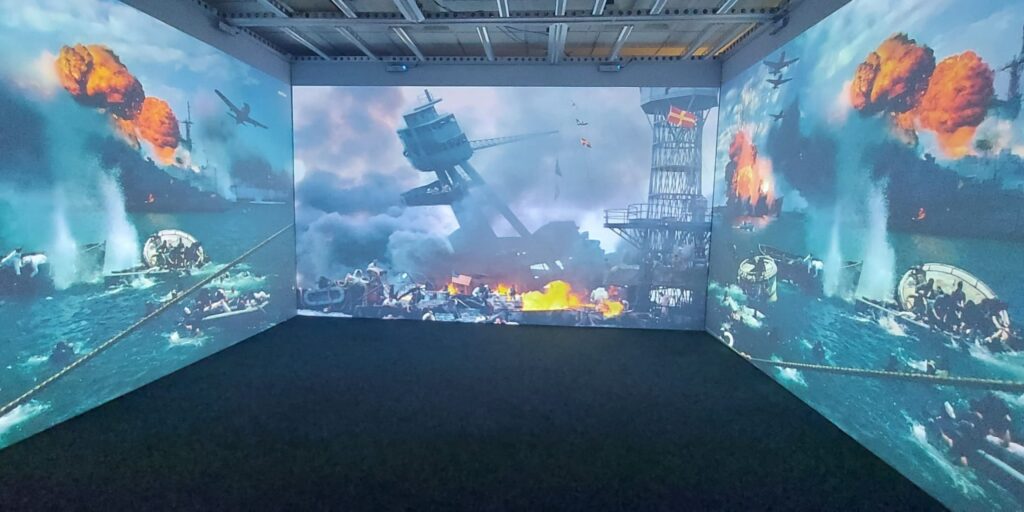
Just imagine: a class in a secondary school could be learning about the Second World War. But rather than learning from a textbook, students can immerse themselves in a space where the horrors are brought to life before their eyes. They can arrive on the beach at Dunkirk and feel the bitter sea breeze as they’re met with the frenzied commands of soldiers. Flashes of light blinds them as the enemy opens fire, making them smell the jarring cacophony of gunpowder and salt water. This enables every child, no matter their learning capability, to fully immerse themselves in the technology while learning through experience rather than written text—enabling students to digest information more easily. For students who are overstimulated by noise and bright lights however, that same exact classroom can be toned down with a calming story about the soldiers on the front line. Lights can be dimmed, and soft swooshes of water with the muted scents of salt air and seaweed can bring the scene to life.
Immersive technologies bring possibilities to the classroom that do not compromise safety. For example, students can go on a field trip to Paris and learn about the construction of the Eiffel Tower without the need for consent forms and safeguarding paperwork. Particularly neurodivergent students, this opens them up to new learning opportunities and makes it possible for every child to be present, something which may not always be possible with physical school trips.
Immersive technology can also be used to develop fine motor and social skills as real-world scenarios can be easily simulated, allowing students to practice how they would handle and react to certain obstacles. Again, as an example, children can practice getting on and off a bus, encouraging them to interact with the driver, make split-second decisions, and manage their emotions. They can experience their deepest fears, like not having the correct amount of money or having to sit beside a stranger on their journey. They can then explore how they would react and dissect their actions—making them feel prepared for these events happening on a real bus, in real time. Further to this, skills like time-management can be explored through gamified content where they must complete quick-fire tasks to catch the bus on time. Immersive technology is predicted to make learning more engaging, personalised and powerful within the next decade. But its biggest strength isn’t that it enables innovative 3D digital education, or that it looks attractive on a school’s website. This flexible and inclusive technology finally gives SEN children, their parents, and their educators the reality of individualised learning and an environment that can be adapted to suit the needs of every child, helping them to develop social skills, control their emotions and most importantly, to learn through experience, in a way that meets their own individual needs.