










Emily Cherry is passionate about making cycling accessible for all.
Learning how to cycle is an important milestone in childhood. It unlocks feelings of freedom and independence that can increase a child’s confidence. Beyond the sense of accomplishment that comes with learning to cycle, it also brings physical, mental, and emotional benefits that can last a lifetime. For children with specific needs or disabilities, learning to cycle may feel like a daunting challenge, but with the right support and equipment, it’s enjoyable and empowering.
The key element when teaching your child how to cycle is a positive mindset. Feeling relaxed, confident, and excited about the process will set you both up for success. Choose the right environment. If your child has sensitivities to noise or visual stimulation, it’s a good idea to reduce external distractions and create a calm, controlled space. Consider your child’s physical abilities, such as their range of movement and weight-bearing capacity. They may benefit from added support, such as straps or harnesses, so they feel secure and comfortable while learning. It’s often helpful to begin with simple exercises that don’t involve full cycling right away. Start by encouraging movement around the cycle, helping them get comfortable with holding the cycle upright or walking alongside it. They can then practise just sitting on the saddle and applying the brakes to get comfortable and familiar with the different sensations.
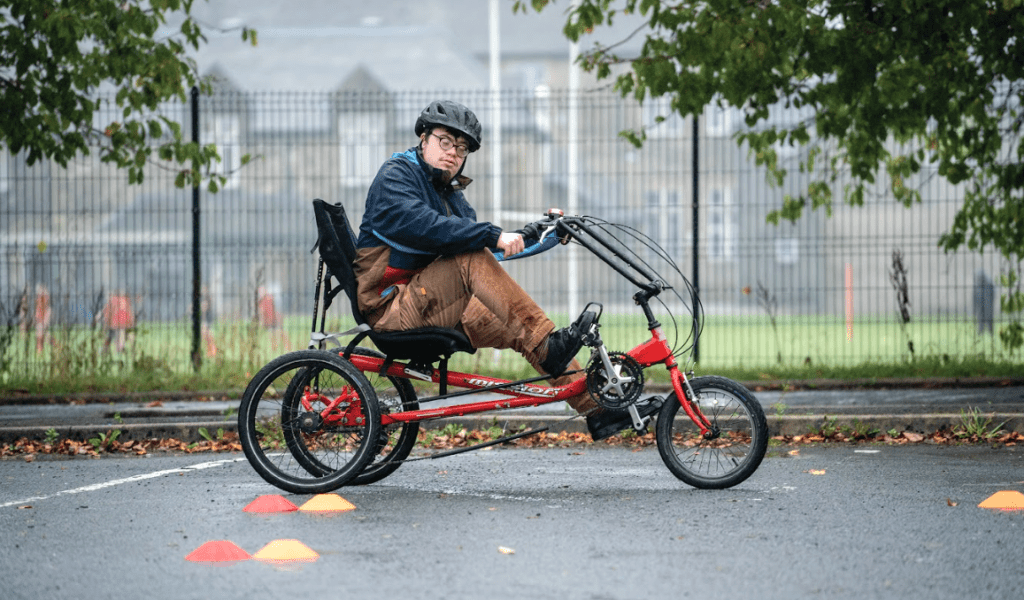
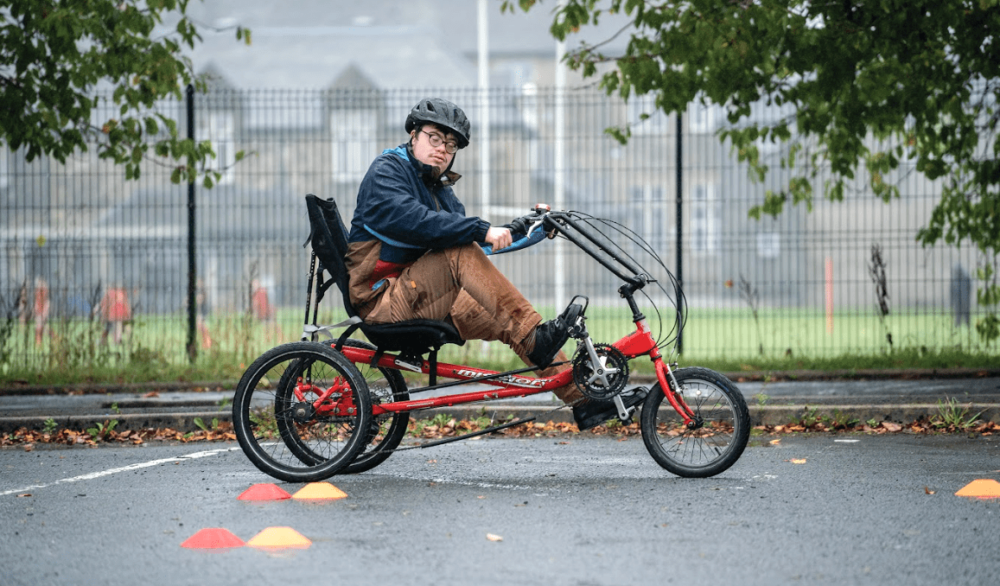
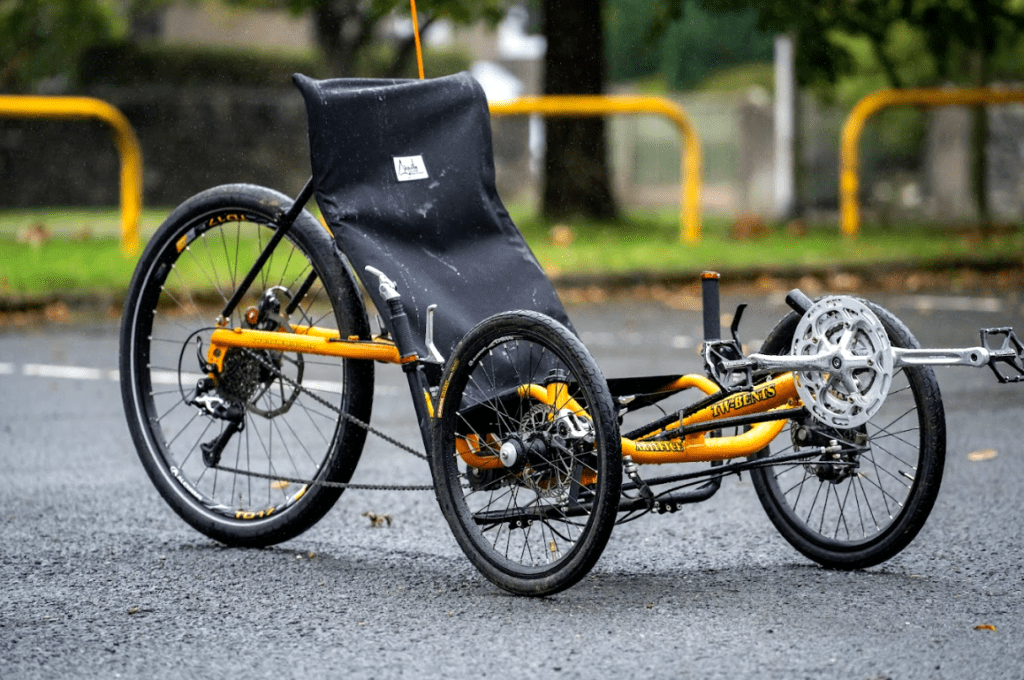
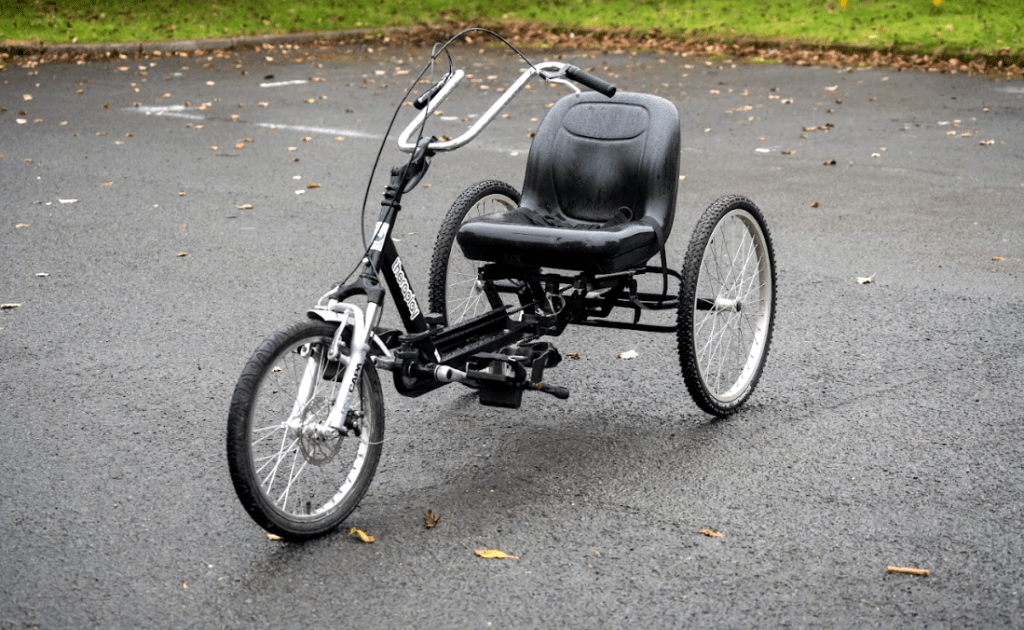
Balance is a fundamental part of cycling, so work on it in a way that is appropriate for your child’s ability. Some children may need more help to balance, while others may progress to balancing on their own more quickly. If your child struggles with coordination, they could try using a trike—this provides stability and allows them to focus on steering and pedalling. Be patient. Gradually build up to more complex skills at your child’s pace. Avoid any pressure to reach the next stage too quickly. Celebrate small wins, whether it’s holding the handlebars or pedalling for a few moments and remember that the goal is for them to enjoy the process. Riding together with a supportive friend or family member can make the process more enjoyable and less intimidating. The more fun they have, the more likely they are to stick with it.
Communication is another important skill for cyclists. This could be through ringing a bell to let people know where you are, or using your arms to point to let people know where you’re planning to go. If your child has limited mobility or difficulty using their arms for signalling, consider fitting the cycle with electronic indicators. Children need to be aware of their surroundings while riding. If your child has restricted mobility, mirrors on the handlebars can provide a helpful way of seeing what’s behind them. If mobility isn’t an issue, simply encourage them to look around, check their space, and assess whether it’s safe to move. This can help to build their decision-making skills and ensure their safety when cycling.
Stay safe. If your child is aiming to cycle on roads, the first few rides should be done in a safe environment. Ride alongside them, or follow behind, to help them gain confidence and understanding. Make sure the route is safe, and that your child is comfortable with the pace and distance.