














Sensory supportive spaces are being integrated in mainstream education. Is this a natural evolution of SEND provision, or is it a response to an entirely new set of needs not previously acknowledged? Kevin Wheatley reports.
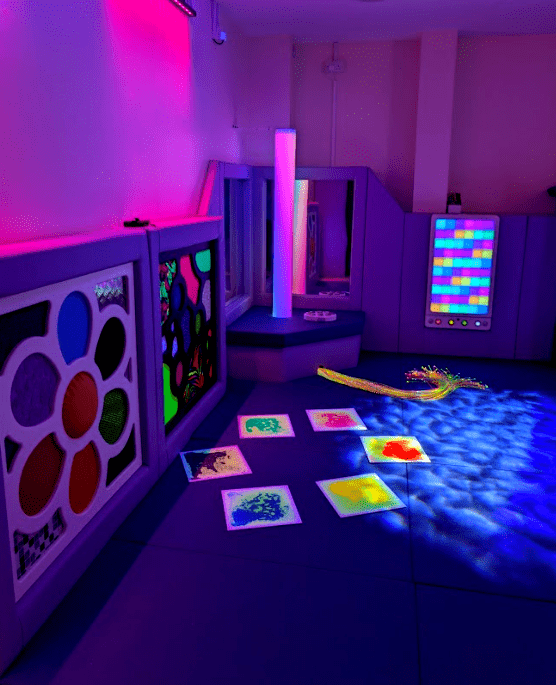
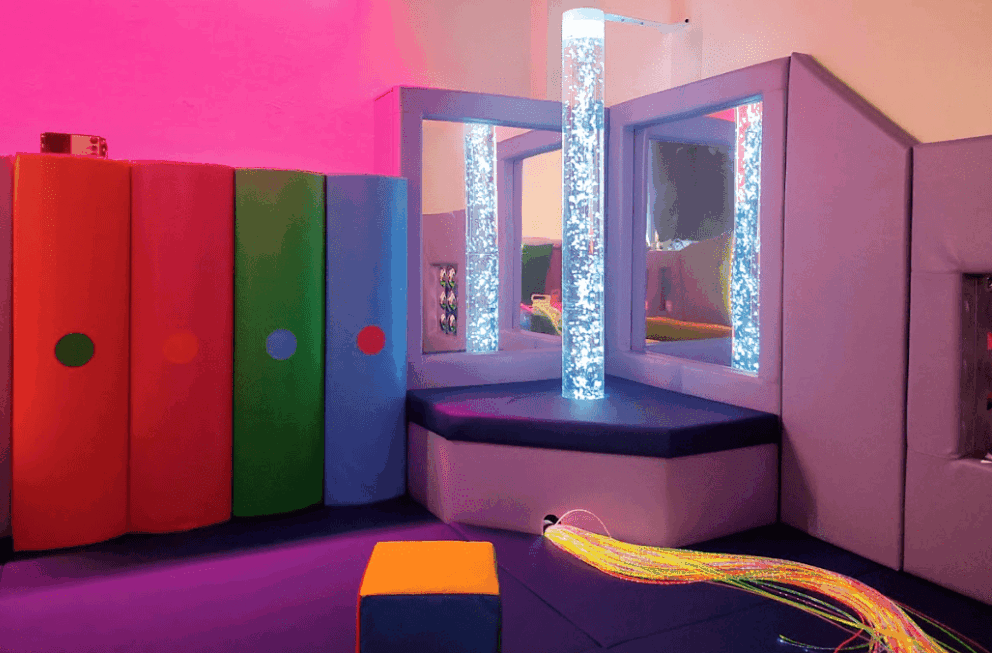
I’ve visited many schools up and down the UK in my capacity as a designer and creator of sensory spaces. When I first started twenty years ago it was predominantly special schools I would be called to visit, which were primarily looking to replace their existing worn out sensory equipment with the latest but basically like-for-like models of the trusted elements they had grown to depend upon. Bubble tubes, fibre optics and a myriad of disco type lights dominated, and for the most part delivered, the desired sensory effects. I was often asked for a Dark Room, lit with UV and reflective products for calming, or a Light Room, where stimulation and self-expression were the goal.
The evolution of these traditional sensory rooms was the Multisensory Room, which combined features of both dark and light rooms. Whatever the desired sensory environment, it could be achieved by what the occupants turned on or off. This was a practical use of space and budget, as one room served the purpose of two. However, unless there was enough space and budget for two multisensory rooms, then capacity was reduced. Specialist SEND schools recognised the need for multiple sensory rooms due to the significant needs of the students and an acknowledgement that these were essential tools for the job at hand. Mainstream schools rarely had sensory provision of any sort. They had SEND students, acknowledged and under the radar, but these students were considered able to cope in traditional classroom settings most of the time.
When they couldn’t cope, students would be removed from class and potentially put into isolation. Ultimately, if they continued not to fit inside the box, they would be referred to a specialist provision for behaviour management. Those who could survive would be driven inwards to protect themselves. If they were lucky, they would escape relatively intact to become a late bloomer, successful in adulthood. It is worth noting at this point that fifty percent of the current prison population are recognised as neurodivergent and rinse-and-repeat offenders. Not such a great success rate.
Fortunately, attitudes have changed over the last decade, especially following the destructive Covid lockdowns. There is now a definite focus on more holistic and whole-child learning models. Students are seen increasingly as individuals, and the biggest growth of all is in the identification and acceptance of neurodivergence as a real and influential part of the human condition and the pressure that everyday places put upon such people.
The traditional approach in mainstream schools was academic achievement. This is still a harsh irritant that frustrates many wonderful teachers. As an outsider looking in, I see more and more recognition that cognitive potential can only be realised when social, emotional, physical, environmental and neurodivergent needs are met first.
Evolution
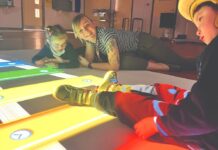
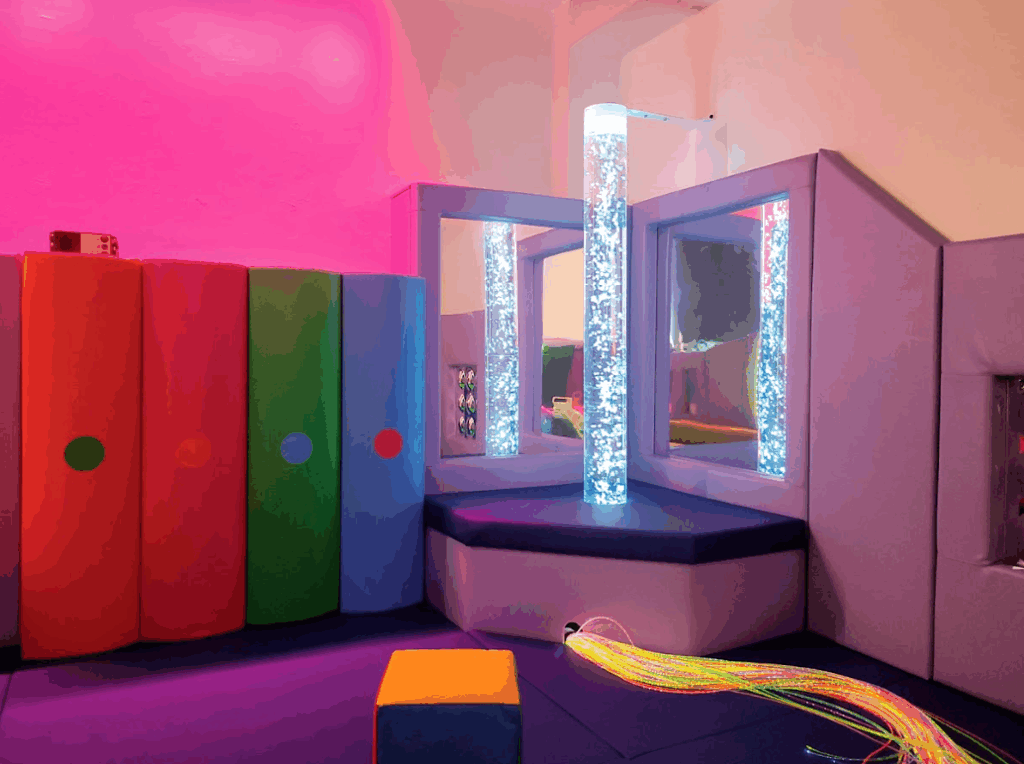
These changing needs could be met in evolutionary fashion, by putting sensory rooms in mainstream schools, thereby providing the tools long recognised as effective by specialist providers. And this has been done. Pioneers such as myself have evolved sensory rooms in mainstream schools to combine traditional sensory equipment with interactive educational elements such as touchscreens and immersive projections that deliver dynamic educational experiences in an engaging way. These are highly effective spaces for learning and for supporting SEND students at the same time. Schools with sensory rooms see significant improvements in student behaviour and focus.
But there’s a problem. Mainstream schools have much larger class sizes than specialist schools, so their sensory rooms need to be bigger and more numerous if we simply follow an evolutionary pathway. The solution to this, as I have witnessed in many schools, is to create a foundation unit where lower ability and challenging behaviour can be better supported. This effectively creates a mini specialist school inside a mainstream school, concentrating the necessary physical, financial and professional resources in one area to manage the most obvious need. But this doesn’t help the increasing number of higher-functioning neurodivergent students who, because of their cognitive potential, have higher expectations placed upon them for academic achievement. There is a tendency to force square pegs into round holes without supporting their basic cognitive processing traits.
Revolution
This increase is driving a pressure wave through society. Sensory facilities are appearing in shopping centres, railway stations, airports, sports venues and many more everyday places. The new tenet is that neurodivergence should be supported in the same way as accessibility for physical disabilities—by right, by law, by design. Sensory support for all students. In the classroom. Every classroom.
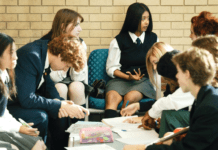
On a recent tour of a progressive primary school I noticed how much effort had been put into the classroom environment by highly motivated teachers and support staff. Inclusion wasn’t overt. It was subtle—an intelligent consequence of good practice. The rooms each had a theme, and not just on noticeboards. In every classroom I noted a tent like structure—clearly a breakout space for pupils who needed a safe space to decompress. Lights were turned off in some classes, and I know from conversations I had that the teachers are aware of children who find the glare of modern LED strips harsh and an impediment to information processing at a cognitive level. The rooms were quiet—a study in order and structure that supports students who are sensitive to noise and require routine to effectively manage their day. This wasn’t Victorian era quiet—it was focused and disciplined in the most positive of ways. Students were deeply engaged in what they were doing but quick to volunteer to answer questions. Not the averted eyes and please leave me alone bowed heads that I remember from my own school days. Students who can only maintain the focus for a set period of time were given regular breaks in activity corners as a form of self-regulation.
There was a foundation unit with a sensory room, and the students here had one to one support. But it was a much smaller cohort than I expected because it was only the students with the most challenging learning needs who were in this unit. They weren’t isolated from the main school, so came in and out of shared resource areas in a controlled and peaceful manner.
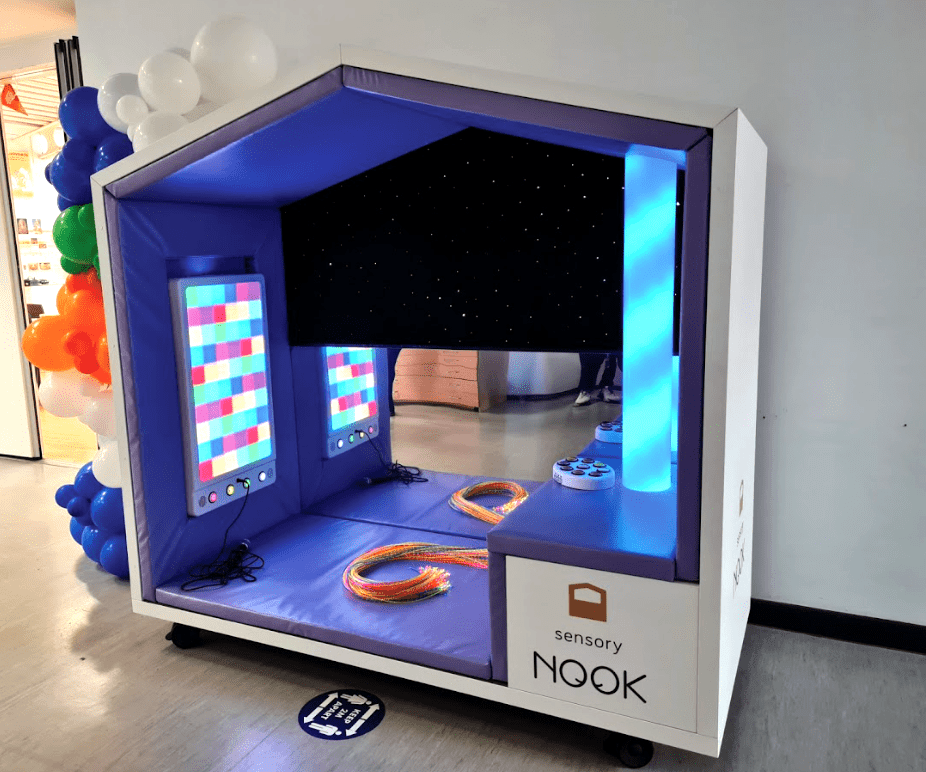
This was a leadership success story, bought into by a whole school staff and community. I have seen enough to know this is not the norm. It appeared so advanced to my eyes as to appear revolutionary. The school is part of a progressive academy trust which shares best practice across all the schools in the group. It is a child-centred focus that achieves academic results by supporting individual needs in seamless group settings. Their ethos is not to see what the child cannot do, but to look for what they can do, and build on those strengths. This engendered a strong sense of confidence and an air of oneness that was deeply motivating.
Having taught young people with SEND and worked in sensory provision for so long, I can normally identify the telltale traits of one or two SEND pupils in a class within minutes. In these groups of students I couldn’t, because the methods used, combined with the environmental adjustments, meant that no-one stood out as being under duress.
My takeaway from this experience is that, while there is still a significant need for traditional sensory rooms and products, sensory environment design needs to pivot to support proactive educational practitioners. We need to design sensory impacting features unobtrusively into everyday places. We should create proactive breakout nooks in a classroom that blend in as just part of the everyday furniture and fittings. We must provide sensory adaptive environments that do not highlight differences, but ever-so-subtly create inclusion and accessibility so we are all comfortable in our own skin, together in the same space. And this revolution is under way.