













Every learner is unique, and each learner experience is different, so we need diverse, needs-based solutions, writes Meredith Reeve.
A recent update from the Joint Council for Qualifications (JCQ) has approved the use of music or white noise in examinations for students with SEND or SEMH. But music and white noise are by no means the only developments which could potentially help millions of young people who require additional support. Between 2022 and 2024, the number of GCSE, International GCSE and International A level exams being taken on screen has doubled, as many years of testing, delivery continuous feedback and refinement shape our next steps as an awarding body.
Paper exams are not always suitable for young people with additional needs. They limit their chance to shine and succeed, which is why access arrangements exist. 625,000 access arrangement requests were approved for students in the 2023/2024 academic year (a 12% increase on the previous year).
Every student is unique, even in groups of students who share the same diagnosis, so schools and colleges should be able to choose the exam formats and conditions which suit their students and enable them to show what they know and what they can do.
Katherine, a Year 12 student who is vision impaired, stressed the difficulties of taking practical subjects like drama, which sometimes led to her struggling as if I didn’t know what I was doing, when it was just a sight-related issue. Her experiences funnelled her towards taking purely written subjects, even though these also caused issues for her, including eyestrain and dealing with unfamiliar formats such as enlarged papers. Part of the answer to unlocking practical subjects for Katherine lay in the light levels in the room, which impacted her ability to perform.
Lina, a blind Year 12 student, wanted wider access to past braille papers to help her prepare in line with her peers. Lina’s geography result, for example, was boosted from a predicted Grade 3 up to an impressive Grade 6 thanks to extensive practice with past braille papers and a personal tutor.
There are subject-specific needs, too. For vision-impaired students, one of the main challenges in learning mathematics is understanding the visual layout of 3D representations. Tactile diagrams and 3D mathematical models can help.
Ongoing conversations with students and educators are informing further strides towards adaptations that transform outcomes, learning and lives. These include trialling different paper types with learners who rely on touch, encouraging exam dress rehearsals with SENCOs and educators, enabling students to find comfort in test conditions, the option to sit assessments at home with remote invigilation, and training educators to offer support with assistive technologies.
Achieving accessibility for every student through on-screen assessment options will take careful, person-led consultation, planning, trials, reviews and collaboration. By continuing on this trajectory, a whole generation could benefit from the ability to navigate their exams with specific tools, text and colour adjustments, zoomable settings and more, which quickly and intelligently meet their accessibility needs.
Through research conducted via eye-tracking technology, we’ve learned that students with the same diagnosis have different strategies in their approach to digital assessment items. Eye-tracking gave us data into how a diverse group of students with mild-to-moderate SEND conditions interacted with questions, allowing us to use these insights to review design considerations that can improve accessibility and user experience, including font, colours and formatting.
Last year we partnered with online school Kings InterHigh to offer remote invigilation to 150 International GCSE learners, many of whom.had SEND or anxiety and health issues. Our aim was to ensure each one of them could complete their formal examinations away from exam halls and test centres while retaining secure examination conditions.
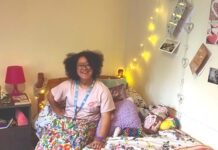
Amelia sat her exams from her bedroom and took rest breaks as she needed them, with access to a mini trampoline that helped her physical and sensory outputs: I can get panic attacks, but being able to sit my exams from somewhere that I felt comfortable and being able to take regular breaks easily and make noise on my trampoline really helped me manage my stress and do my best. Amelia achieved top grades in all her subjects.
Sylvie, who has myalgic encephalomyelitis/chronic fatigue syndrome (ME/CFS) and typically works best in the afternoons, was allowed staggered exam start times and longer rest breaks, all remotely invigilated. She reported that remote invigilation was a game changer… with my condition I honestly don’t think that I would have been able to do them in person, or I would have just been so exhausted when I got there that I would have done terribly.
These developments are steps in a bigger journey, and there is plenty more to do before every school and college feels equipped to give what every young person needs to fulfil their full potential in exams. We’re keen to ensure this journey remains a completely collaborative one. This is the key to unlocking systemic transformation. We must listen to students and educators. We must observe what works and what could be done better, gathering data and insights to help the sector address the gaps every step of the way, and continuing conversations that include schools, settings, communities, organisations, and policymakers.
Every learner is unique, and each learner experience is different, so we need diverse, needs-based solutions. These are the stepping stones to positive and lasting change, and they will benefit every learner in every school and college.